WeChat 코드를 스캔하여 문의하세요
WeChat 코드를 스캔하여 문의하세요
이메일을 보내주시면 최대한 빨리 답변해 드리겠습니다..
마음과 영혼을 다해 미래를 창조하다


Railway transportation, as the major artery of the national economy, undertakes the important mission of passenger and freight transportation. In this system, 철도 주물 play an irreplaceable fundamental role. Although they are not conspicuous, they are the cornerstone ensuring the safety, stability and efficient operation of railways.
1.1 그 중, rail fasteners are typical casting products, including elastic bars, pads and bolts.
These components directly fix the rails and bear the huge pressure and impact force from train operation. If the fasteners have insufficient strength or poor durability, it can easily lead to deformation of the track geometry and increase the risk of derailment. The casting process can form complex-structured metal parts in one go and ensure their mechanical properties meet the requirements for long-term use.
1.2 The bogie is the core component for train movement, and its key load-bearing parts, such as side frames and bolsters, are mostly castings.
These parts are responsible for transferring the weight of the car body to the wheelsets and buffering the vibration caused by track irregularities. Casting technology enables these parts to balance internal toughness and surface hardness, coping with long-term alternating loads. Historically, defects in bogie castings have led to many major accidents, which, from the opposite side, prove the impact of their quality on train safety.
1.3 The braking system also relies on castings, such as brake calipers and brake shoe holders.
During train deceleration or stopping, these parts need to withstand extremely high instantaneous temperatures and friction forces. The high thermal stability and wear resistance of casting alloys provide a guarantee for braking performance. 추가적으로, special components in railway turnouts, such as switch blades and frogs, are realized through casting processes to achieve complex geometries and specific mechanical properties, ensuring smooth track switching for trains.
2.1 동시에, the casting process can flexibly adjust the metal composition, allowing different parts of the component to have differentiated properties.
예를 들어, brake shoe holders need to be heat-resistant at both ends and impact-resistant in the middle, which is difficult to achieve through traditional mechanical processing, but can be effectively solved by casting.
2.2 With the development of railways towards high speed and heavy load, the requirements for castings are increasing. High-speed railways require components with higher fatigue strength and dimensional stability; heavy-load railways require better impact resistance and wear resistance. Advances in materials science have enabled the wide application of high-strength ductile iron, special alloy steel and other new materials in railway casting, significantly improving the service life and reliability of components.
3.1동시에, the application of modern non-destructive testing technology enables regular inspections of castings without disassembly, promptly detecting internal defects and preventing accidents.
3.2 The quality of railway castings directly affects the overall operating costs of the system. The high-quality castings can significantly reduce maintenance costs and economic losses caused by line shutdowns. 그러므로, in railway construction and renovation, the selection and quality control of castings remain key links.
As a key component of the railway system, the performance and quality of railway castings directly relate to transportation safety, efficiency and cost. With technological progress and standard improvement, casting processes will continue to provide a solid guarantee for the reliable operation of modern railway transportation. In the foreseeable future, this fundamental link will remain an indispensable part of railway technology development.
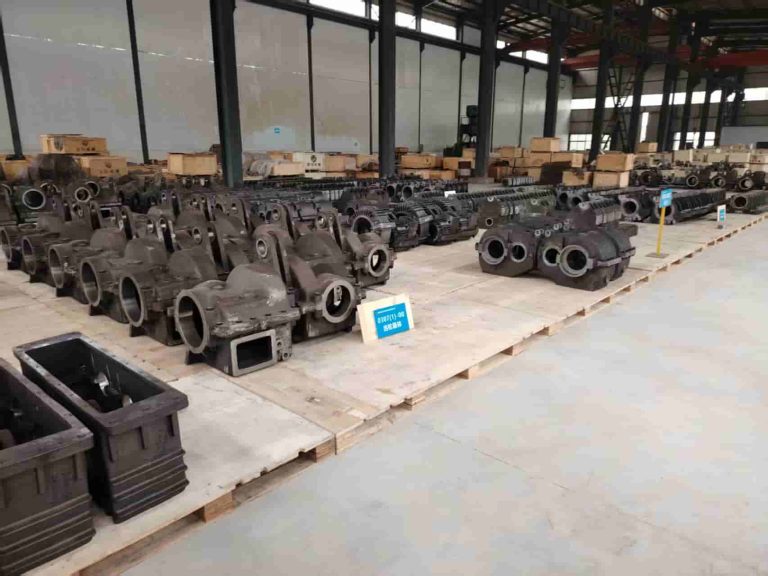
뤄양포뇨중공업(Luoyang Fonyo Heavy Industries), 주식회사, 1998년에 설립된 철도 주조 부품 제조업체입니다.. 우리 공장의 면적은 72,600㎡입니다., 이상으로 300 직원, 32 기술자, 포함 5 수석 엔지니어, 11 보조 엔지니어, 그리고 16 기술자. 우리의 생산 능력은 30,000 연간 톤. 현재, 우리는 주로 주조물을 생산하고 있습니다, 가공, 기관차 조립 및 조립, 철도 차량, 고속 열차, 광산 장비, 풍력, 등.
우리는 CRRC에 철도 부품을 공급하고 있습니다.(이상 포함 20 CRRC의 지사 및 자회사), Gemac 엔지니어링 기계, 삼니그룹, 중공업, 등. 우리의 제품은 러시아로 수출되었습니다, 미국, 독일, 아르헨티나, 일본, 프랑스, 남아프리카, 이탈리아와 전 세계의 다른 나라들.