WeChat 코드를 스캔하여 문의하세요
WeChat 코드를 스캔하여 문의하세요
이메일을 보내주시면 최대한 빨리 답변해 드리겠습니다..
마음과 영혼을 다해 미래를 창조하다


In the modern transportation system, trains have become the backbone of land transportation with their high efficiency and large capacity. 하지만, whether it is a high-speed EMU, a subway shuttling between cities, or a heavy-loaded train loaded with goods, how to ensure that they can stop safely and smoothly when needed has always been a core issue in railway technology. 이 과정에서, 브레이크 슈즈, as a key component of the train braking system, play an indispensable role.
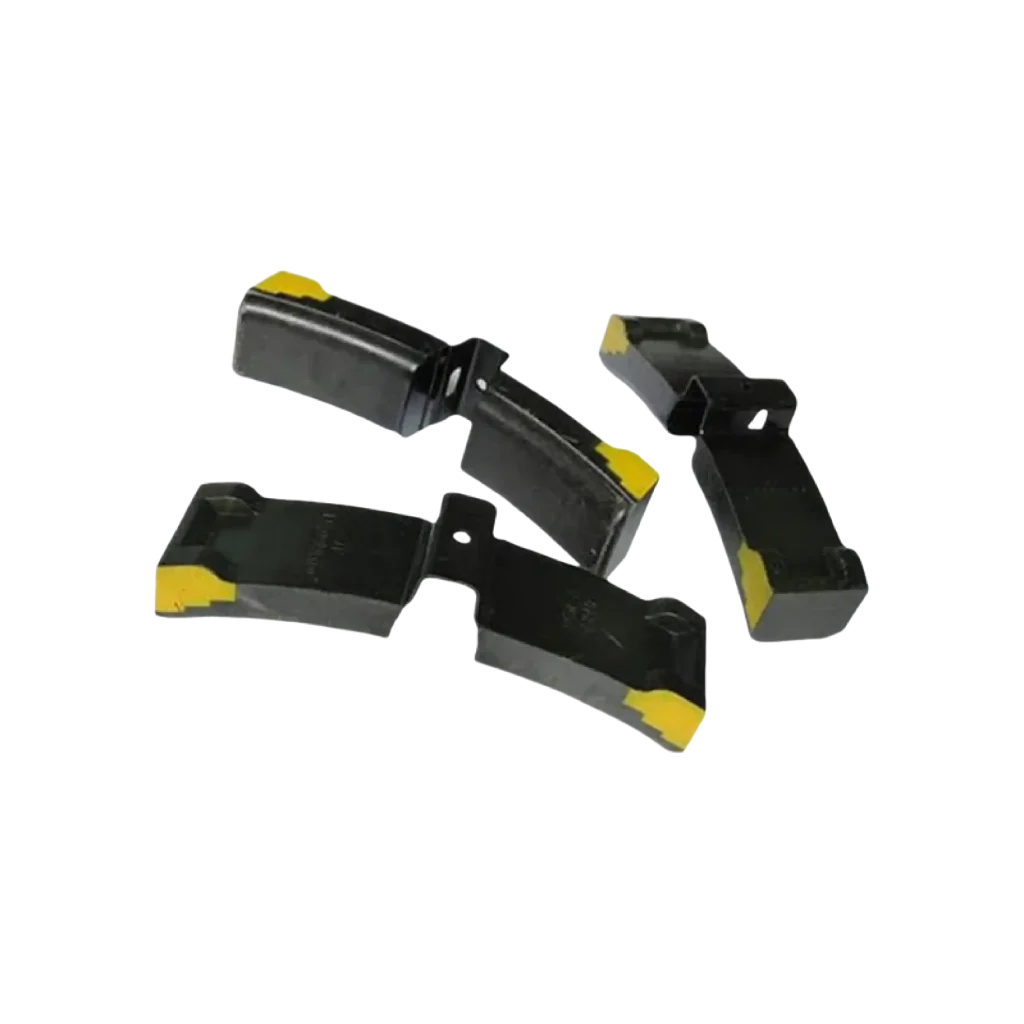
The basic principle of brake shoes
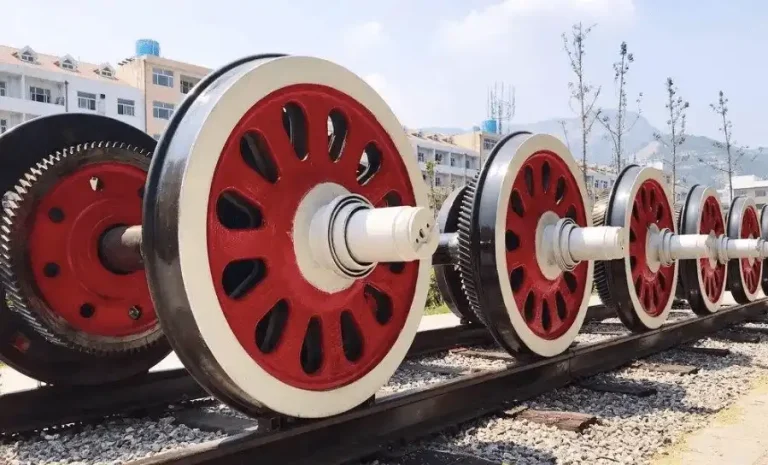
Brake shoes, as the name suggests, are a component that achieves braking through friction, and their working principle is similar to the bicycle brakes we use in daily life. When the train needs to slow down or stop, the braking system will apply pressure to make the brake shoes close to the tread of the wheel (즉, the part where the wheel contacts the track), and the friction between the two will convert the kinetic energy of the train into heat energy, thereby achieving the purpose of slowing down or stopping. This process seems simple, but it actually involves complex technologies in many fields, such as materials science, mechanics, and thermodynamics.
Material and classification of brake shoes
The performance of brake shoes is directly related to the braking effect and safety of the train, so the selection of its material is crucial. Historically, brake shoes have evolved from cast iron and synthetic materials to composite materials.
Cast iron brake shoes: Early train braking systems mostly used cast iron brake shoes. Cast iron materials have high hardness and good wear resistance, but the heat generated during braking can easily cause overheating of the brake shoes and wheel treads and even “thermal cracking”, affecting the braking effect and wheel life.
Synthetic brake shoes: With the advancement of materials science, synthetic brake shoes have gradually replaced cast iron brake shoes and become mainstream. Synthetic brake shoes are usually made of resin, rubber, fiber and other materials and have the advantages of stable friction coefficient, low wear rate and low noise. 게다가, synthetic brake shoes generate less heat during braking and cause less damage to the wheel tread.
Powder metallurgy brake shoes: In order to meet the higher requirements of high-speed trains and heavy-load trains for braking performance, powder metallurgy brake shoes came into being. This type of brake shoe is made of high-performance materials such as metal powder and ceramic powder through a powder metallurgy process. It has extremely high wear resistance and thermal stability and can maintain stable friction performance at high temperatures.
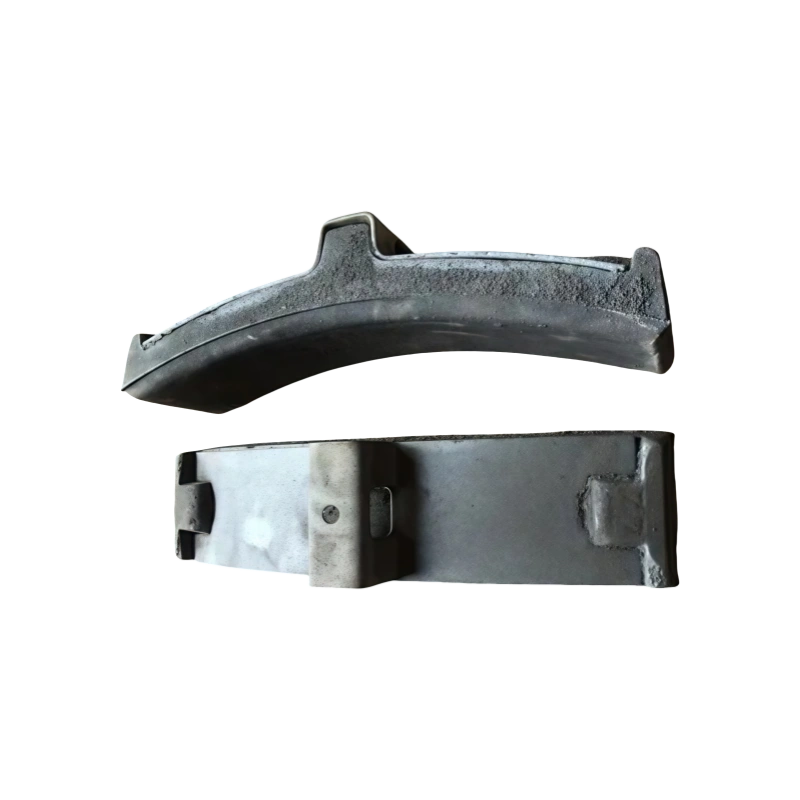
Braking process and thermal management of brake shoes
When the train brakes, the friction between the brake shoes and the wheel treads will generate a lot of heat. It is estimated that when a fully loaded train is in emergency braking, the temperature at the contact point between the brake shoes and the wheel treads can instantly rise to hundreds of degrees Celsius or even higher. 그러므로, how to effectively manage the heat generated during braking and prevent the brake shoes and wheel treads from overheating is a key issue in brake shoe design.
Modern brake shoes usually adopt special heat dissipation structures, such as internal heat dissipation holes or heat sinks, to increase the heat conduction area and accelerate heat dissipation. 게다가, some high-performance brake shoes will also add additives with excellent thermal conductivity to the material to further improve the heat dissipation efficiency.
Maintenance and replacement of brake shoes
As a consumable part of the train, brake shoes need to be inspected and maintained regularly. With the increase in use time, the brake shoes will gradually wear out. When they are worn to a certain extent, they must be replaced in time; 그렇지 않으면, it will affect the braking performance and even cause braking failure. 그러므로, the railway department usually formulates strict brake shoe replacement standards to ensure the braking safety of the train.
When replacing brake shoes, technicians need to ensure that the contact area between the new brake shoes and the wheel tread meets the requirements to ensure the uniformity of the braking effect. 게다가, the installation angle and pressure of the brake shoes also need to be precisely adjusted to avoid brake eccentric wear or noise problems caused by improper installation.
Future development trend
철도기술의 지속적인 발전으로, brake shoes are also developing towards higher performance, longer life and lower maintenance costs. 예를 들어, some new brake shoes use self-lubricating materials, which can automatically reduce the wear of the friction surface during braking and extend the service life. 게다가, with the introduction of intelligent technology, brake shoes may be integrated with sensors in the future to monitor the braking status in real-time, providing more reliable technical guarantees for the safe operation of trains.
Brake shoes, this seemingly inconspicuous small component, is an indispensable “iron shoe” in the train braking system. It guards the safe operation of every train in an unknown way. From cast iron to synthetic materials to powder metallurgy, every technological innovation of brake shoes marks the progress of railway safety technology. 미래에, with the continuous development of materials science and intelligent technology, brake shoes will surely play a more important role in ensuring the safety of railway transportation.
공급자
뤄양포뇨중공업(Luoyang Fonyo Heavy Industries), 주식회사,1998년에 설립된 캐스트 철도 부품 제조업체입니다. 저희 공장 부지는 72,600㎡입니다., 이상으로 300 직원, 32 기술자, 포함 5 수석 엔지니어, 11 보조 엔지니어, 그리고 16 기술자. 우리의 생산 능력은 30,000 연간 톤. 현재, 우리는 주로 주조물을 생산하고 있습니다, 가공, 기관차 조립 및 조립,철도 차량,고속 열차, 광산 장비,풍력,etc.Our 제품은 러시아에 수출되었습니다, 미국, 독일, 아르헨티나, 일본, 프랑스, 남아프리카,이탈리아 및 기타 국가.
연락하다: 스텔라 리우
이메일:[email protected]
이동하는:+8615515351287