हमसे संपर्क करने के लिए WeChat कोड को स्कैन करें
हमसे संपर्क करने के लिए WeChat कोड को स्कैन करें
बेझिझक हमें एक ईमेल भेजें और हम यथाशीघ्र आपको उत्तर देंगे.
दिल और आत्मा से भविष्य का निर्माण करें


Earlier this year, we completed the production and shipment of two containers of heavy duty railway wheels for a freight rail project in South America.
For our team, projects like this are never just about finishing production and arranging shipment. Heavy duty railway wheels operate under constant high axle loads and repeated impact stress, so every stage — from material preparation to final inspection — affects long-term service performance.
Because of that, this order was handled with close attention throughout the entire manufacturing process.
Production began with material selection.
For railway wheels used in freight applications, steel quality has a direct influence on wear resistance, fatigue performance, और परिचालन सुरक्षा. Before forging even starts, the chemical composition and raw material consistency already determine much of the wheel’s final behavior in service.
For this project, the materials were prepared according to the customer’s operating requirements and axle load conditions. Throughout production, the batches were monitored carefully to maintain stable mechanical properties.
Once the steel preparation was completed, the wheels entered the forging stage.
Forging is one of the most important parts of railway wheel manufacturing because it improves the internal structure of the steel and helps create better grain flow inside the wheel body. This becomes especially important for heavy freight applications where wheels are continuously exposed to cyclic loading and rolling contact stress.
Inside the workshop, the forging process for large railway wheels is never a fast operation. Temperature control, deformation ratio, and forming consistency all need to stay within a controlled range to avoid internal defects and structural instability later in service.

After forging, the wheels moved into उष्मा उपचार.
This stage required particularly careful control because the balance between hardness and toughness directly affects wheel life. Excessive hardness may increase crack risk, while insufficient hardness can reduce wear resistance under heavy load conditions.
During processing, cooling rate and holding temperature were monitored continuously to ensure stable metallurgical performance across the wheel section.
Our inspection team also checked the final microstructure and hardness distribution after heat treatment. For railway wheels, these details are important because they influence fatigue resistance and long-term reliability in actual railway operation.
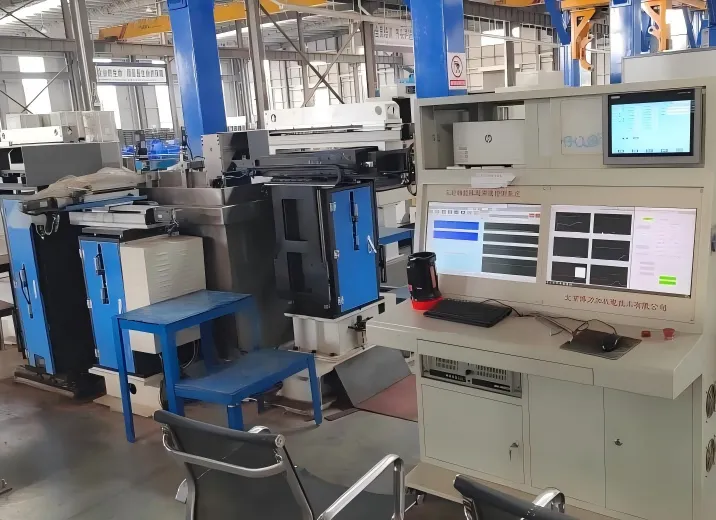
गर्मी उपचार के बाद, the wheels entered सीएनसी मशीनिंग for profile processing and dimensional finishing.
At this stage, the focus shifts from metallurgical performance to dimensional accuracy. Wheel profile consistency, surface finish, and machining precision all affect wheel-rail contact behavior during operation.
Throughout machining and final inspection, our team carried out dimensional checks, अल्ट्रासोनिक परीक्षण, magnetic particle inspection, and hardness verification before approving the wheels for shipment.
By the time the inspection process was completed, the wheels were ready for overseas delivery.
Since the destination was South America, packaging protection became another important part of the project.
Long ocean transportation routes near equatorial regions often involve high humidity and significant temperature variation, which can increase the risk of corrosion during transit.
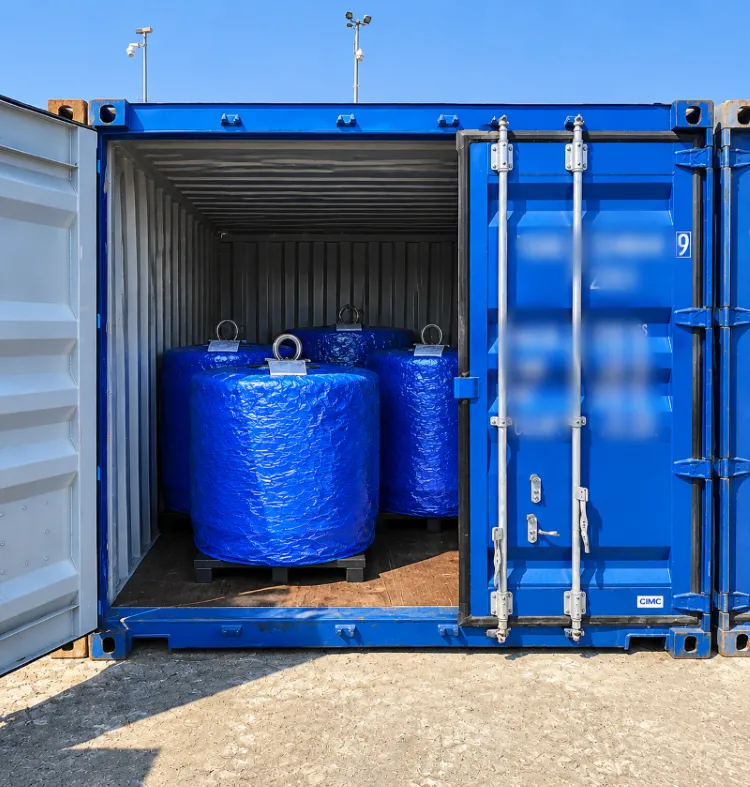
To reduce that risk, the wheels were packed with moisture-proof protection and reinforced carefully inside the containers before loading. The shipment was then delivered in two 40HQ containers and transported to the customer’s facility successfully.
When the wheels arrived, the customer confirmed that the products were received in good condition without visible corrosion or transportation damage.
For us, projects like this represent more than simply exporting railway products overseas.
They reflect the complete manufacturing process behind heavy duty railway wheels — from material control and forging to heat treatment, मशीनिंग, inspection, packaging, and final delivery.
As international railway projects continue demanding higher reliability and longer service life, consistent process control becomes increasingly important throughout production.
This South America project was another example of how careful manufacturing and stable quality management help ensure reliable railway wheel performance in demanding freight rail applications.