סרוק את קוד WeChat כדי ליצור איתנו קשר
סרוק את קוד WeChat כדי ליצור איתנו קשר
אתם מוזמנים לשלוח לנו מייל ואנו נענה לכם בהקדם האפשרי.
יצירת העתיד בלב ובנשמה


In the deep mine tunnels, mine electric locomotives rumble and shuttle, carrying the safety of minerals and miners. When deceleration or emergency braking is needed, a reliable and efficient braking system is the guarantee of life. In this system, the brake shoes, as the core components that directly generate braking force by friction with the wheel tread, their performance directly affects the transportation efficiency and underground safety. Mine brake shoes are mainly divided into three categories: נעלי בלמים מברזל יצוק, synthetic brake shoes (non-metallic brake shoes), and powder metallurgy brake shoes. Each relys on its unique performance to safeguard the steel arteries of the mine.
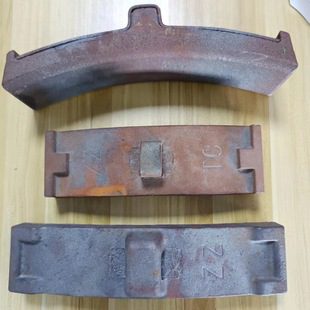
אֲנִי. Cast iron brake shoes
1.1תכונות
Durable and robust material: Mainly made of high-strength gray cast iron or alloy cast iron, it features high hardness and good wear resistance, performing well under heavy loads and harsh conditions.
Economical cost: The raw materials are readily available, and the manufacturing process is relatively mature, resulting in a relatively low initial purchase cost.
Stable coefficient of friction (initially): Under dry and clean conditions, it can provide a relatively stable braking force.
Good thermal conductivity: It can quickly conduct away the heat generated by friction, helping to prevent local overheating.
1.2 Functions and limitations:
Widely used in traditional dry braking systems, especially suitable for areas sensitive to cost, with relatively dry working conditions and less dust.
Main disadvantages: The coefficient of friction is significantly reduced by moisture and oil contamination; it can produce loud noises and sparks during braking, which is a major safety hazard in gas mines; it generates a large amount of metal dust during wear, which may pollute the environment and accelerate wheel wear; the coefficient of friction declines rapidly under continuous high-intensity braking.

2.1 תכונות
Spark-free safety: Composed of resin, rubber, reinforcing fibers (such as steel fibers, glass fibers, aramid fibers), graphite, and various friction modifiers, it generates almost no sparks during braking, making it a mandatory safety choice for gas mines and high-gas mines.
Outstanding and stable friction performance: The friction coefficient (typically 0.4-0.45 או גבוה יותר) is generally higher than that of cast iron brake shoes, and it is less affected by environmental humidity and minor oil contamination, providing more reliable and consistent braking force under various working conditions.
2.2 Quiet and environmentally friendly
The braking process produces significantly less noise, improving the working environment; the wear generates non-metallic dust, causing less pollution.
Less wear on wheels: The material is relatively soft, effectively protecting the wheel tread and extending the wheel’s service life.
2.3 Functions and limitations:
Widely used in coal mines with extremely high safety requirements (especially gas mines), metal mines, and tunnel projects, it is the mainstream choice for modern mine electric locomotives.
Main disadvantages: The cost is usually higher than that of cast iron brake shoes; the high-temperature resistance is relatively limited, and thermal fade or burnout may occur under extreme high-temperature conditions (such as continuous downhill braking for a long time); although it has good wear resistance, it may not be as good as specially designed alloy brake shoes in some extremely harsh working conditions; the initial friction coefficient may slightly decrease after absorbing water in some formulations.
Outstanding high-temperature stability: Made from iron or copper-based metal powders (such as iron, copper, and tin) mixed with graphite and friction modifiers, and formed through pressing and sintering. Its core advantage lies in maintaining a high and stable coefficient of friction (typically above 0.45) even at extremely high temperatures (up to 800°C or higher), with an extremely strong resistance to thermal fade.
3.1 Superior wear resistance
With High hardness, excellent wear resistance, and long service life, it is particularly suitable for harsh conditions such as heavy loads and long downhill runs.
3.2 High load-bearing capacity
They can withstand extremely high specific pressure and power loads.
3.3 Functions and limitations
Designed specifically for extreme braking conditions, such as large electric locomotives, heavy-load long-slope transportation lines, high-temperature environments, or situations requiring frequent and powerful braking, it is a reliable guarantee for efficient mine transportation and special working conditions.
Ⅳ Main disadvantages:
It has the highest cost among the three types of brake shoes; braking noise is usually louder; the material is hard, causing relatively more wear to the wheel tread compared to synthetic brake shoes, and matching high-hardness wheels should be selected; in low-temperature or humid conditions, the initial friction coefficient may be slightly lower than that of synthetic brake shoes.
4.1 Selection and maintenance of brake shoes: The key to safety and efficiency
Choosing the right brake shoes is no small matter and requires comprehensive consideration:
4.2 Mine safety level: Spark-free synthetic brake shoes must be used in gas mines.
Operating conditions: Load, slope, braking frequency, environment (dry or wet, dust, טֶמפֶּרָטוּרָה).
Cost-effectiveness: Balance initial cost, replacement frequency, wheel wear, and maintenance cost.
4.3 Regulations and standards: Strictly adhere to national and industry safety and performance standards.
Ⅴ Daily maintenance points:
5.1 Regular thickness check: Replace when worn to the limit thickness (usually 1/3 אֶל 1/2 of the original thickness) to prevent brake failure.
5.2 Check condition: Observe for cracks, chipping, severe uneven wear, and oil contamination.
5.3 Cleaning and adjustment: Keep the brake shoes and braking mechanism clean, ensuring uniform and good contact between the brake shoes and the wheel tread.
5.4 Pair replacement: Both left and right brake shoes in the same braking unit should be replaced simultaneously to ensure balanced braking force.
Mine electric locomotive brake shoes, although seemingly insignificant wear parts, are a crucial link in the safety chain of mine transportation. From the economical and reliable cast iron brake shoes, to the safe and quiet synthetic brake shoes, to the powder metallurgy brake shoes that conquer extreme environments, the technological evolution has always revolved around the core goals of “safer, more efficient, and more reliable”.
Luoyang Fonyo Heavy Industries Co., בע"מ, נוסדה בשנת 1998, היא יצרנית בחלקי יציקת רכבת. המפעל שלנו משתרע על שטח של 72,600㎡, עם יותר מ 300 עובדים, 32 טכנאים, לְרַבּוֹת 5 מהנדסים בכירים, 11 עוזרי מהנדסים, ו 16 טכנאים. כושר הייצור שלנו הוא 30,000 טונות בשנה. כַּיוֹם, אנחנו מייצרים בעיקר ליהוק, עיבוד שבבי, והרכבה לקטר, קְרוֹנוֹעַ, רכבות מהירות, ציוד כרייה, כוח רוח, וכו.
אנחנו אספקת חלקי הרכבת ל-CRRC(כולל יותר מ 20 חברות סניפים וחברות בת של CRRC), Gemac מכונות הנדסיות, Sanygroup, סיטי תעשיות כבדות, וכו. המוצרים שלנו יוצאו לרוסיה, ארצות הברית, גֶרמָנִיָה, ארגנטינה, יַפָּן, צָרְפַת, דרום אפריקה, איטליה ומדינות אחרות בכל רחבי העולם.
מידע ליצירת קשר:
אֶלֶקטרוֹנִי:[email protected]
נייד:008615515321683