Scannez le code WeChat pour nous contacter
Scannez le code WeChat pour nous contacter
N'hésitez pas à nous envoyer un email et nous vous répondrons dans les plus brefs délais.
Créer l'avenir avec cœur et âme


In a high-speed railway traction motor, le stator pressure ring may not look impressive at first glance, yet it plays a key role in keeping the stator core stable. It holds the stacked laminations tightly and helps the motor stay reliable during long hours of vibration and changing loads. Because of this role, the casting method used to produce a stator pressure ring becomes very important. Two common options are verre d'eau, moulage au sable et Coulée en V. Chacun a ses propres atouts, and each fits different production goals. The differences are clear once we look at what the ring actually needs.
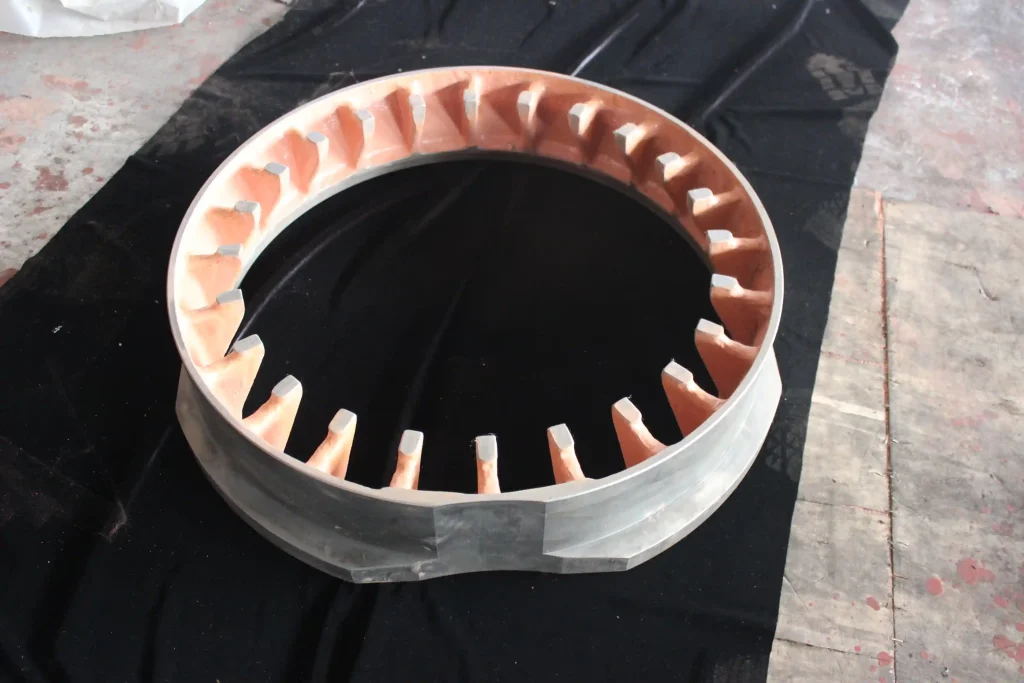
UN stator pressure ring must stay strong, écurie, and consistent in shape. It needs good dimensions, smooth surfaces, and enough stiffness to handle vibration. It also should not require too much machining later on. Cependant, different casting methods can influence these qualities in different ways. Donc, understanding the nature of each method helps us choose the right one with confidence.
Moulage au sable de verre à eau is a mature process and widely used. It produces solid, dense structures and works well with materials like ductile iron or cast steel. Par conséquent, it is a very reliable choice for stator pressure ring production. When the order includes several sizes or medium quantities, it will have many advantages.
This process keeps costs under control, since the moulding materials are simple and the equipment is not too complex. En outre, the method offers stable quality because operators are very familiar with it. The shape remains consistent, and deformation stays within a predictable range. For traction motor parts that need durability, and price can not be very high, so reasonable pricing is necessary, water glass sand casting often provides a balanced and practical solution.
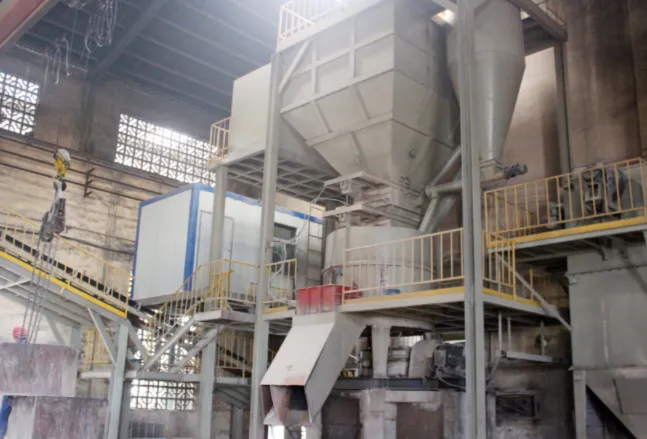
Compared with water glass sand casting, Coulée en V looks more refined. It uses vacuum suction to hold dry sand in shape, which means it does not need binders. Par conséquent, the sand mould stays clean, and the cast surface becomes much smoother. For a stator pressure ring, this brings several benefits.
D'abord, the dimensional accuracy improves, especially in roundness and flatness. This helps the ring fit better with other motor parts. Deuxième, the clean surface reduces machining time, because the metal comes out with fewer bumps or defects. En outre, the ring usually ends up lighter, as the machining allowance can be smaller. Entre-temps, the vacuum also helps keep the mould stable, so deformation becomes less of a concern. If a project focuses on precision and has a high demand for the appearance quality, or light machining, Coulée en V often is a good choice that stands out.
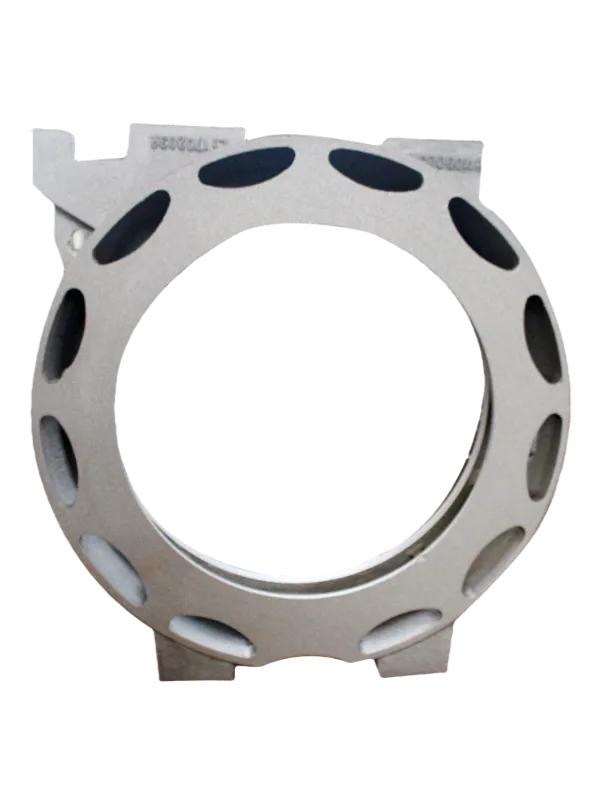
Although both methods can produce a stator pressure ring, they aim at different priorities. Moulage au sable de verre à eau focuses on strength, rentabilité, and flexibility across many sizes. D'autre part, Coulée en V offers better accuracy, cleaner surfaces, and higher consistency. Par exemple, if the ring needs tight tolerances or a very neat outer surface, V-process casting has an advantage that no other process can compare. En revanche, if the project involves multiple models and needs stable strength at a lower cost, water glass sand casting fits well.
En outre, environmental concerns also play a role. Because the V-process uses no binders, it produces fewer emissions. Some customers prefer it for this reason. Cependant, its tooling cost is usually higher, cela fonctionne donc mieux lorsque les quantités sont stables ou lorsque la précision compte clairement.
Sélection d'une méthode de diffusion pour un stator pressure ring il ne s'agit pas simplement de choisir le meilleur. Plutôt, il s'agit de choisir ce qui correspond aux besoins de l'application. Si l'accent est mis sur la stabilité, flexibilité, et le prix, moulage au sable de verre à eau offre un processus fiable. Entre-temps, si la priorité est la précision, surfaces propres, ou usinage réduit, Coulée en V offre un net avantage. Les deux méthodes restent donc fiables dans le domaine des moteurs de traction, et les deux peuvent fournir des anneaux solides et durables lorsqu'ils sont utilisés correctement.
Les deux procédés de coulée peuvent produire un anneau de pression statorique de haute qualité, mais ils servent des objectifs différents. Le moulage au sable de verre soluble offre stabilité et rentabilité, tandis que la coulée en V offre une meilleure précision et de meilleures performances de surface. Parce que Luoyang Fonyo Heavy Industries Co. Ltée. uses both methods, we can match each project with the most suitable approach and make sure every stator pressure ring meets the expectations of high-speed railway applications.
Pour plus d'informations, vous pouvez visiter notre site Web: www.railwaypart.com