Scan the WeChat code to contact us
Scan the WeChat code to contact us
Feel free to send us a email and we will reply to you as soon as possible.
Creating the future with heart and soul


When people talk about train locomotive speed, the first explanation that usually comes up is power. Bigger motors, higher horsepower, stronger traction — it sounds logical that more power should mean a faster train.
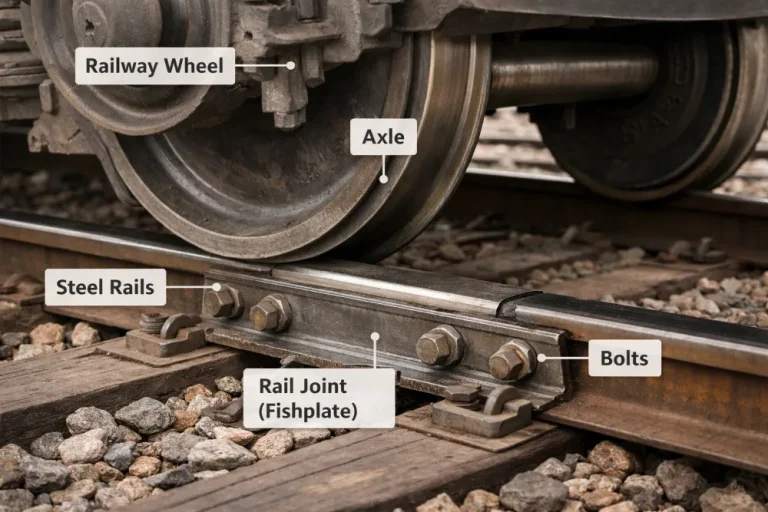
In real railway engineering, however, this assumption is often wrong. Many locomotives are capable of delivering far more power than the system actually allows them to use. The true limit of speed is rarely the motor. Instead, it is hidden in the interaction between the wheel, the rail, and the dynamic behavior of the entire running system.
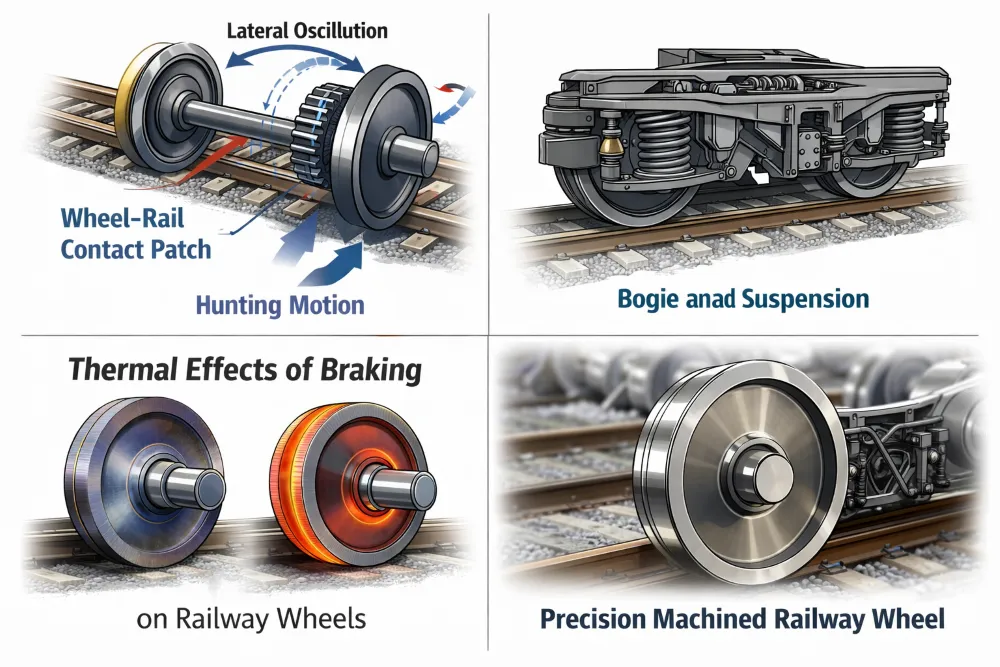
As speed increases, the wheelsets do not simply roll faster along the track. They begin to develop a lateral oscillation known as hunting motion. At lower speeds this movement is small and self-stabilizing, but beyond a certain critical point the oscillation grows unstable.
When this happens, no amount of additional power can safely push the train faster. The limit has already been reached by physics, not by the traction system. This critical speed is strongly influenced by the geometry and condition of the railway wheels. Small variations in wheel profile, diameter consistency, roundness, or contact geometry with the rail can significantly change when hunting instability appears.
This is one of the key reasons why high-speed trains impose extremely strict requirements on wheel machining precision and profile control.
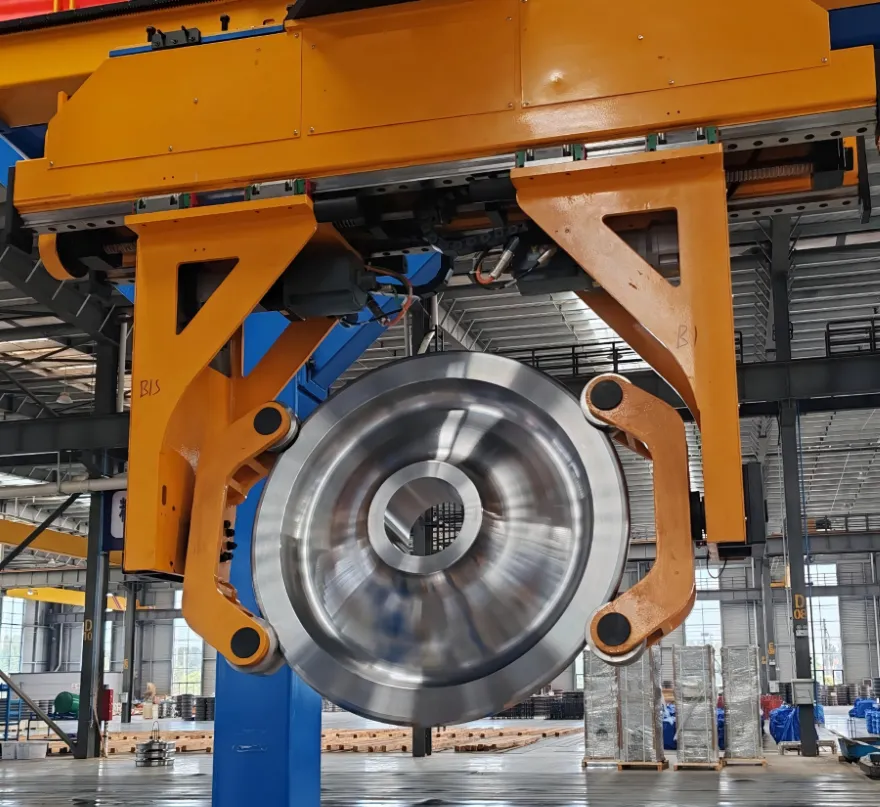
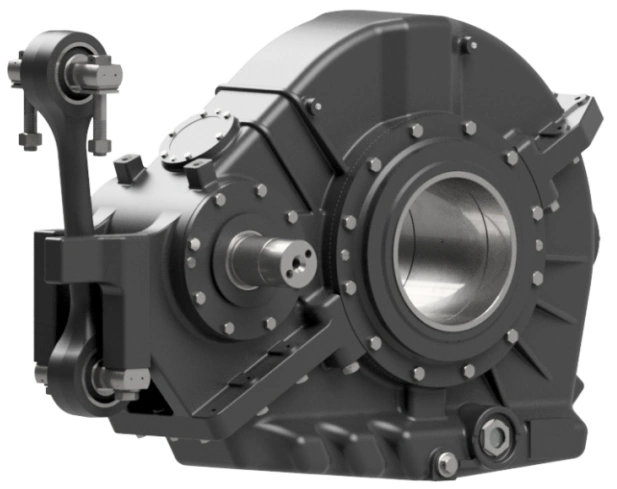
Another less obvious factor quietly defines how fast a locomotive can theoretically run: the relationship between motor speed, gear ratio, and wheel diameter. These three elements act together as a speed converter.
When a wheel is new, its full diameter allows the train to achieve the designed line speed at a given motor RPM. As the wheel wears in service and the diameter gradually decreases, the same motor speed now produces a lower linear speed.
In many real cases, locomotives are described as being “underpowered” when the true reason is that worn wheel diameter combined with the original gear ratio has reduced the achievable speed.
At higher speeds, attention shifts from simple rotation to dynamic behavior. The bogie and suspension system must control vibration, guide the wheelsets precisely, and absorb oscillations that grow stronger with speed.
Changes in suspension stiffness, damping characteristics, or wheelset positioning can alter the maximum stable speed by tens of kilometers per hour, even when the traction system remains unchanged.
Railway operation is governed not only by how fast a train can run, but by how safely it can stop. As speed increases, the heat generated during braking rises dramatically.
Wheels and brake discs must withstand thermal loads without cracking, deforming, or losing friction performance. On many lines, speed limits exist not because trains cannot go faster, but because the braking system and wheel thermal behavior would no longer meet safety requirements at higher speeds.
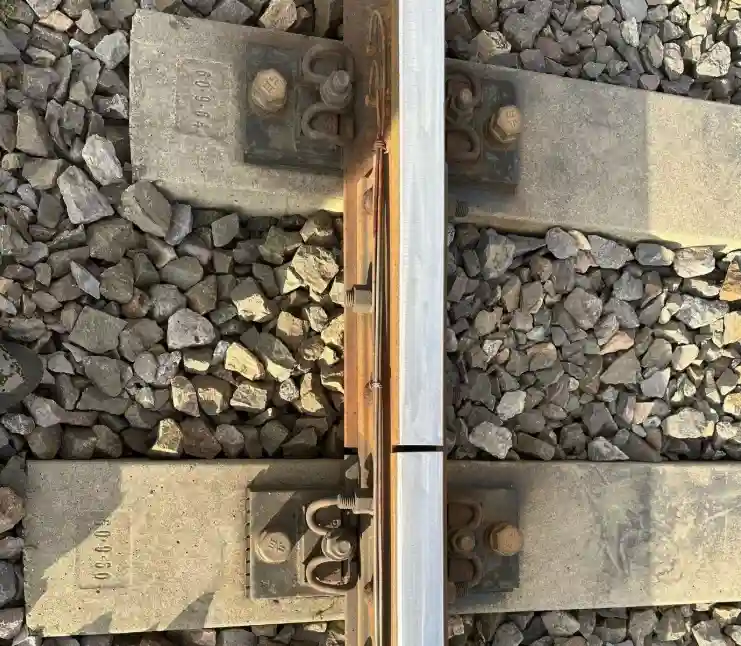
Infrastructure adds another layer of constraint. Track geometry, curve radius, turnout design, track irregularities, and maintenance standards all define a ceiling that rolling stock must respect.
A locomotive designed for 200 km/h may spend its entire service life operating at 120 km/h simply because the track does not permit more.
Once speeds exceed roughly 160 km/h, aerodynamic resistance begins to dominate. The power required to overcome air drag increases rapidly, which is why conventional locomotives pulling passenger coaches cannot match the speeds of modern EMUs or high-speed trainsets, regardless of traction power.
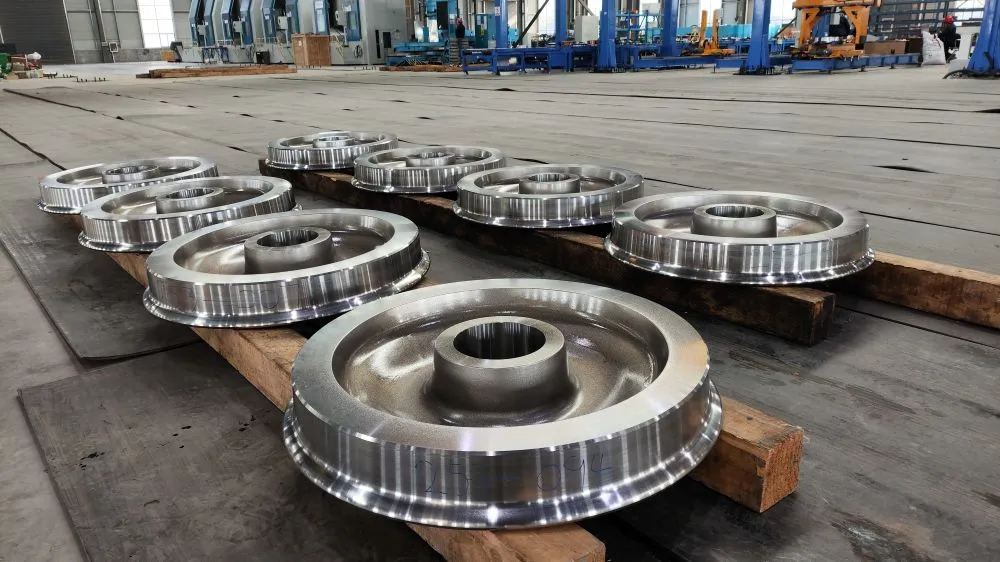
When all these factors are viewed together, a clear engineering truth emerges. Train speed is not determined by power alone. It is determined by stability, geometry, dynamic control, braking performance, infrastructure, and aerodynamic behavior working as a complete system.
At the center of this system is a component that often receives less attention than it deserves: the railway wheel.
Wheel diameter, profile accuracy, roundness, material response to heat, and the quality of the wheel–rail interface directly influence how fast a train can safely and effectively operate. This is why modern railway engineering places extraordinary emphasis on wheel design, machining precision, heat treatment, and profile control. In many cases, the real speed limit of a train begins at the wheel–rail contact. This is also why railway wheel manufacturing is treated as a critical engineering discipline rather than a simple production process.
At Luoyang Fonyo Heavy Industries Co., Ltd., we focus on precision machining, profile control, and heat treatment stability for railway wheels used in demanding railway applications worldwide.
👉 Explore our full product catalog:
📧 Inquiry & Technical Support: Contact Us
📍 Visit Our Website: www.railwaypart.com