Отсканируйте код WeChat, чтобы связаться с нами.
Отсканируйте код WeChat, чтобы связаться с нами.
Не стесняйтесь, отправьте нам электронное письмо, и мы ответим вам как можно скорее.
Создаем будущее сердцем и душой


A locomotive gearbox transfers power from the traction motor to the wheelset. Its job sounds simple, but railway operating conditions make the system much more demanding than a standard industrial gearbox.
In real railway service, the drivetrain faces constant vibration, repeated traction and braking forces, rail impact, and changing axle loads. Через некоторое время, even small alignment errors can affect gear contact, increase vibration, and accelerate wear inside the system.
Из-за этого, gearbox reliability depends on much more than the gears themselves. Housing rigidity, точность обработки, bearing alignment, and lubrication stability all play an important role in long-term railway operation.
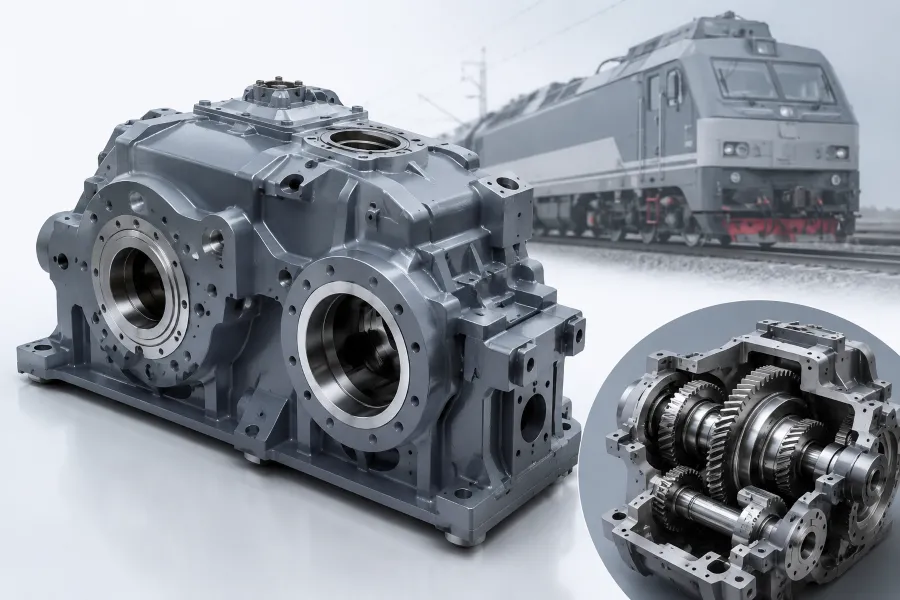
The gearbox reduces the high rotational speed of the traction motor and converts it into usable wheel torque.
Во время работы, the gearbox does not work under steady conditions. Loads change constantly as the train accelerates, brakes, passes curves, or runs on uneven track. The gearbox must keep stable gear contact under all of these conditions.
Во многих случаях, gearbox problems do not start from one failed part. Small alignment changes may slowly affect gear meshing and bearing loading. At first, the problem may only appear as slight vibration or noise. After long service cycles, however, uneven wear and fatigue become more serious.
That is why railway gearbox design focuses heavily on rigidity, alignment accuracy, and long-term structural stability.
A locomotive gearbox contains gears, валы, подшипники, lubrication systems, and the gearbox housing. All of these parts work together under heavy dynamic loading.
The gear set transfers torque between the traction motor and wheelset. In railway applications, the gears work under repeated cyclic loading for long periods of time. If gear alignment changes even slightly, tooth contact may become uneven and vibration can increase during operation.
Shafts also play an important role. Under repeated traction and braking forces, shaft rigidity helps maintain stable gear positioning. Poor shaft alignment can gradually create uneven loading inside the gearbox.
Bearings are highly sensitive to alignment accuracy. In railway gearboxes, many bearing problems are actually related to housing deformation or machining deviation rather than the bearing itself. If the bearing seat loses alignment, load distribution becomes uneven and fatigue life may decrease quickly.
The lubrication system must also remain stable under vibration and temperature changes. When lubrication becomes unstable, friction and heat increase rapidly, especially during high-speed operation.
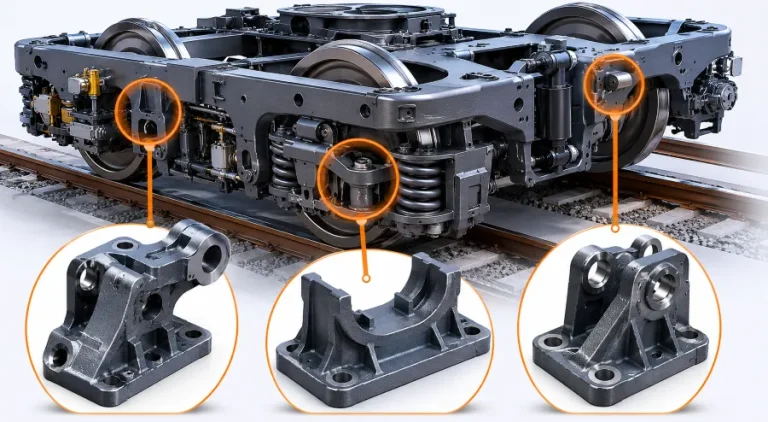
In railway applications, the gearbox housing is not just an outer shell. It supports the entire transmission system and keeps gears, валы, and bearings in the correct position.
This is especially important in heavy-duty railway service. Even very small machining errors between bearing bores can affect shaft center distance and gear meshing accuracy. Через некоторое время, these small deviations may increase vibration and uneven wear inside the gearbox.
In real manufacturing environments, engineers often find that gearbox problems are linked to housing rigidity or machining accuracy rather than the gear set itself.
Stress concentration is another important issue. In large gearbox housings, fatigue cracks are more likely to appear near mounting areas, rib transitions, or bearing support regions. These areas experience repeated cyclic loading during long-term operation.
Из-за этого, gearbox housing design requires both strong structural rigidity and precise machining control.
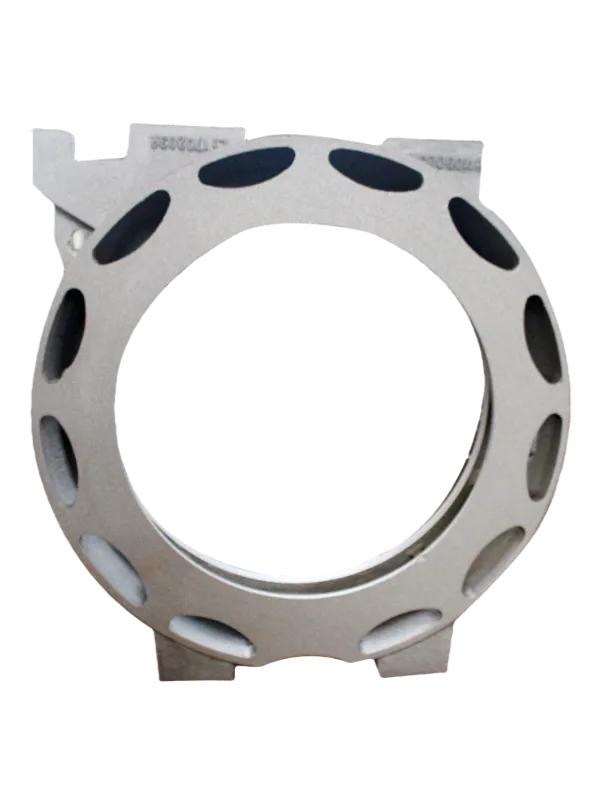
Most heavy-duty railway gearbox housings are made from cast steel. Cast steel provides the strength and rigidity needed for continuous railway operation.
Однако, producing a large gearbox housing is not only a casting process. Controlling residual stress inside the casting is also critical. If internal stress is not properly relieved, the housing may deform during machining or later during service.
После кастинга, precision machining becomes one of the most important steps. Bearing bores, mounting surfaces, and shaft support areas must remain within strict tolerance limits.
In gearbox housing manufacturing, engineers pay close attention to:
If these areas are not properly controlled, vibration and uneven loading may appear even when the gears themselves meet specification.
To improve long-term reliability, railway gearbox housings usually undergo stress-relief heat treatment, проверка размеров, ультразвуковой контроль, and magnetic particle inspection before assembly.
Most gearbox failures develop gradually over time.
In many railway systems, increased vibration is one of the first warning signs. At the beginning, the problem may only appear as slight noise or localized gear wear. As operation continues, however, the vibration becomes more noticeable and wear spreads through the drivetrain system.
Bearing fatigue is another common issue. Во многих случаях, the root cause is uneven loading caused by housing deformation, shaft misalignment, or unstable lubrication conditions.
Fatigue cracks may also appear in high-stress areas of the gearbox housing. Common locations include mounting bosses, rib transition zones, and bearing support regions where cyclic stress continues for long periods.
Because railway gearboxes work under repeated dynamic loading, long-term structural stability is often more important than short-term peak strength.
Locomotive gearboxes are widely used in:
Although operating speeds and torque requirements vary between applications, the engineering goal is similar: stable torque transmission, low vibration, and long service life under heavy-duty operating conditions.
As railway systems continue moving toward higher speeds and heavier axle loads, gearbox housing rigidity and machining precision are becoming even more important.
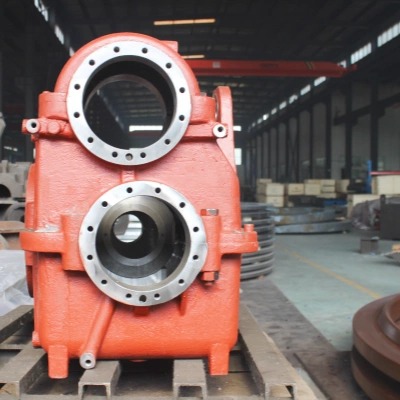
A locomotive gearbox is much more than a simple reduction gear system. In railway applications, long-term reliability depends on how well gears, валы, подшипники, lubrication systems, and the gearbox housing work together under dynamic loading conditions.
Во многих случаях, gearbox performance is strongly influenced by housing rigidity, точность обработки, and alignment stability during long-term operation. Из-за этого, railway gearbox manufacturing requires careful control of casting quality, machining precision, and inspection processes.
В Лоянская компания Fonyo Heavy Industries Co., ООО, we manufacture railway gearbox housings, железнодорожные колеса, railway axle box housing и heavy-duty drivetrain components for global railway and industrial applications. Our capabilities include cast steel production, обработка с ЧПУ, проверка размеров, and non-destructive testing for heavy-duty railway systems.
A locomotive gearbox transfers torque from the traction motor to the wheelset while reducing rotational speed and increasing usable traction force.
Housing rigidity affects bearing alignment and gear meshing stability. If the housing deforms during operation, vibration and uneven wear may gradually increase.
Common causes include shaft misalignment, housing deformation, unstable gear contact, bearing wear, and lubrication problems.
Cast steel provides high strength, good rigidity, and strong vibration resistance for heavy-duty railway applications.
Manufacturers commonly perform ultrasonic testing (ЮТ), магнитопорошковый контроль (МТ), проверка размеров, and machining verification to ensure structural reliability and alignment accuracy.