हमसे संपर्क करने के लिए WeChat कोड को स्कैन करें
हमसे संपर्क करने के लिए WeChat कोड को स्कैन करें
बेझिझक हमें एक ईमेल भेजें और हम यथाशीघ्र आपको उत्तर देंगे.
दिल और आत्मा से भविष्य का निर्माण करें


In many industrial rail systems, the reliability of the entire machine often depends on a single component: the wheel. Whether it is an overhead crane, transfer cart, or automated warehouse vehicle, rail wheels carry heavy loads while keeping the equipment aligned on the track. At first glance, these wheels may appear simple, but their design has a major impact on safety, स्थिरता, और दीर्घकालिक रखरखाव लागत. One of the most important design differences is the flange configuration. Engineers commonly choose between single flange wheels और double flange wheels, and selecting the right option can significantly affect system performance. Understanding the difference between these two types of industrial rail wheels helps engineers and buyers choose the most suitable solution for their equipment.
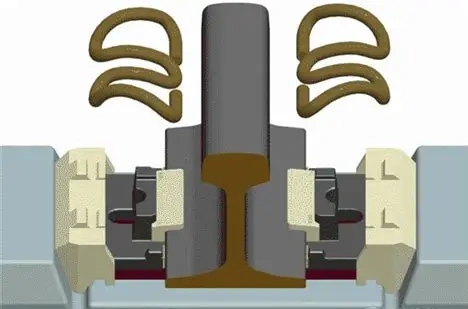
Double flange wheels feature flanges on both sides of the wheel tread. The rail sits between these two flanges, creating a guiding structure that helps keep the wheel centered on the track.
Because the rail is supported on both sides, double flange wheels provide stronger lateral guidance and significantly reduce the risk of derailment.
These wheels are commonly used in:
For applications where safety and stability are critical, double flange wheels are often the preferred choice.

Single flange wheels have a flange on only one side of the wheel tread, typically on the inner side of the rail.
In many crane systems, wheels are installed in pairs. Each wheel has its flange facing inward, and the pair works together to guide the equipment along the rail.
Single flange wheels are widely used in:
Because only one flange contacts the rail, single flange wheels usually generate less friction during operation.
The main difference between these two designs lies in how the wheel interacts with the rail.
| Feature | Single Flange Wheels | डबल निकला हुआ किनारा पहिये |
| Rail guidance | Guided from one side | Guided from both sides |
| स्थिरता | Moderate | High |
| Rail alignment tolerance | Higher | Lower |
| Lateral force resistance | Standard | Strong |
| Typical applications | Cranes | Transfer carts |
While single flange wheels rely on paired alignment for guidance, double flange wheels provide independent rail guidance.
Although single flange wheels are common in crane systems, certain applications benefit significantly from double flange wheels.
Large industrial vehicles often carry extremely heavy loads. These loads generate strong lateral forces during acceleration and braking.
Double flange wheels help keep the wheel centered on the rail under these conditions.
Transfer carts and automated vehicles often travel long distances along factory rail systems.
Even small rail alignment deviations can cause gradual drift. Double flange wheels provide consistent guidance over long travel distances.
In steel mills, foundries, and automated warehouses, derailments can cause serious equipment damage and downtime.
Double flange wheels act as a physical safety feature that reduces derailment risk.

Regardless of flange design, manufacturing quality plays a critical role in wheel performance.
For demanding applications, forged crane wheels typically outperform cast wheels.
The forging process compresses the steel, producing a dense and uniform grain structure. This improves fatigue resistance and load-bearing capacity.
Forged wheels are less likely to contain internal defects such as shrinkage cavities or porosity, which can occur in cast components.
This makes forged wheels particularly suitable for heavy-duty crane wheels and industrial rail wheels.
Before selecting rail wheels for an application, engineers typically evaluate several factors.
The wheel must match the rail type and width.
Common rail types include:
The maximum static and dynamic load carried by each wheel determines the required wheel diameter and material strength.
Environmental conditions can also influence wheel design, शामिल:

Industrial rail wheels may appear simple, but their design directly affects equipment safety, स्थिरता, and long-term operating efficiency.
While single flange wheels are widely used in standard crane systems, double flange wheels provide stronger rail guidance and improved derailment protection in heavy-duty applications.
Choosing the right wheel depends on rail alignment, load conditions, and operating environment.
पर लुओयांग फ़ोन्यो हेवी इंडस्ट्रीज कंपनी, लिमिटेड., we specialize in manufacturing forged crane wheels, double flange rail wheels, and customized industrial rail wheel solutions for heavy-duty applications. Our engineering team can design wheels based on your rail profile, load requirements, and operating conditions.
Learn more about our products and capabilities at
www.railwaypart.com, or contact us for a technical consultation and quotation.