Scannen Sie den WeChat-Code, um mit uns Kontakt aufzunehmen
Scannen Sie den WeChat-Code, um mit uns Kontakt aufzunehmen
Schicken Sie uns gerne eine E-Mail und wir werden Ihnen so schnell wie möglich antworten.
Mit Herz und Seele die Zukunft gestalten


Railway wheels operate under extremely demanding conditions. Every day they withstand heavy loads, kontinuierlicher Rollkontakt, high temperatures generated by braking, and long-term cyclic stress. Railway wheel heat treatment is one of the most critical processes in railway wheel manufacturing. It directly determines the hardness distribution, Verschleißfestigkeit, and service life of the wheel. As engineers involved in Eisenbahnrad Herstellung, we know that even small deviations in temperature, cooling rate, or process timing can affect the final hardness distribution and structural stability of the wheel.
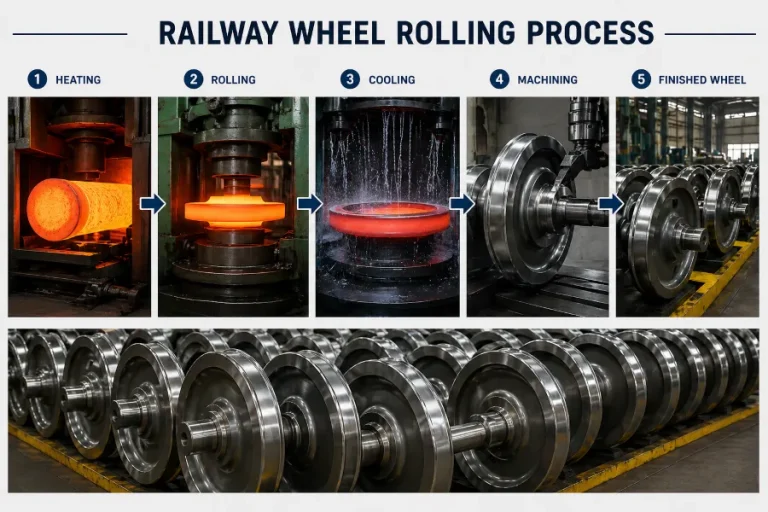
In unserer Produktionslinie, Eisenbahnrad heat treatment is carried out using a tunnel-type heating furnace, automated quenching system, and a digital process tracking platform. These systems work together to ensure that every wheel achieves consistent mechanical properties and stable quality.
process itself, it is important to understand why heat treatment is so important for railway wheels.
A railway wheel must achieve several key properties simultaneously:
These properties cannot be achieved by casting or forging alone. The microstructure of the steel must be carefully adjusted through annealing, Abschrecken, und Temperierung.
Heat treatment transforms the internal structure of the steel, allowing the wheel to meet the strict requirements of modern railway systems.
ICHn our railway wheel production line, the heating stage is carried out using a tunnel-type heating furnace.
Tunnel furnaces are widely used in modern railway wheel manufacturing because they allow continuous and stable heat treatment. Wheels move gradually through different temperature zones, ensuring controlled heating and soaking.
This furnace is used for several important processes:
To achieve precise temperature control, the furnace operates with a pulse proportional temperature control system.
This technology continuously adjusts the energy input to the furnace burners based on real-time temperature feedback.
Als Ingenieure, we pay particular attention to temperature uniformity inside the furnace. Uneven heating can cause several problems, wie zum Beispiel:
By maintaining a stable furnace environment and minimizing temperature fluctuation, the tunnel furnace ensures that each railway wheel receives uniform heating before quenching.

One of the most important improvements in modern railway wheel manufacturing is the integration of digital process control.
In our facility, the entire heat treatment line is connected to an information management system that automatically tracks each wheel as it moves through the production process.
This system records critical data such as:
Every wheel receives a complete digital record of its heat treatment history.
Aus ingenieurwissenschaftlicher Sicht, this traceability is extremely valuable. If any issue occurs during inspection or service, the recorded data allows engineers to review the entire production process and identify potential causes.
Noch wichtiger, digital monitoring helps maintain stable production conditions by ensuring that all parameters remain within specified ranges.
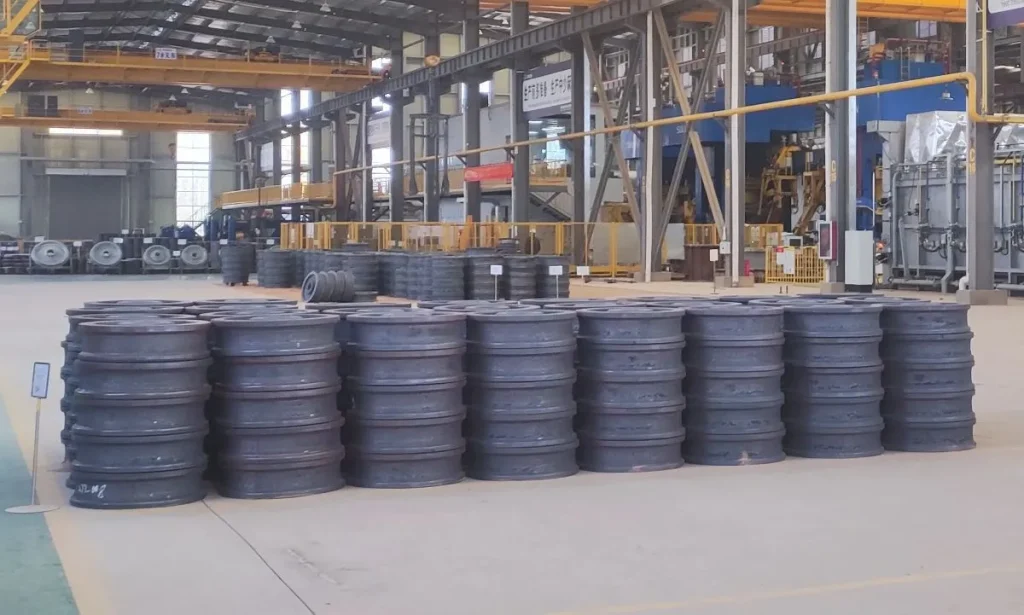
After the wheels reach the required austenitizing temperature in the furnace, they enter the quenching stage.
Quenching is one of the most critical steps in railway wheel heat treatment because it directly determines the hardness and wear resistance of the wheel tread.
In unserer Produktionslinie, quenching is performed using an automated water quenching system.
Several key parameters must be precisely controlled during quenching:
If any of these parameters fluctuate significantly, the cooling rate of the wheel can change, which may lead to uneven hardness or undesirable microstructures.
Our quenching system automatically adjusts these parameters in real time. Sensors continuously monitor the cooling conditions, and the system maintains stable quenching performance throughout the process.
This level of control helps ensure that each wheel achieves the required hardness profile while avoiding excessive internal stress.
One of the main objectives of railway wheel heat treatment is to achieve uniform hardness distribution.
The tread area of the wheel must have sufficient hardness to resist wear and rolling contact fatigue. Gleichzeitig, the wheel web and hub must maintain adequate toughness to absorb mechanical stresses.
Through the coordinated control of:
we are able to maintain a stable metallurgical structure throughout the wheel.
This consistency is extremely important in railway applications, where even minor variations between wheels can affect long-term operational reliability.
Nach dem Abschrecken, railway wheels undergo a tempering process.
Tempering is necessary because quenching alone can produce high hardness but also introduces internal stress. Without tempering, the wheel may become too brittle for railway service.
During tempering, the wheels are reheated in the tunnel furnace at a controlled temperature for a specific period of time.
This process allows the steel structure to stabilize, reducing internal stress while maintaining the required hardness level.
The result is a balanced combination of:
These properties are essential for railway wheels operating under long-term cyclic loading conditions.
Aus technischer Sicht, the reliability of railway wheels depends not only on individual equipment but on the integration of the entire heat treatment system.
By combining advanced furnace technology, automated quenching equipment, and digital monitoring systems, we can maintain strict control over every stage of the heat treatment process.
This integrated approach ensures:
For railway operators and rolling stock manufacturers, this consistency is critical for ensuring safe and efficient railway transportation.
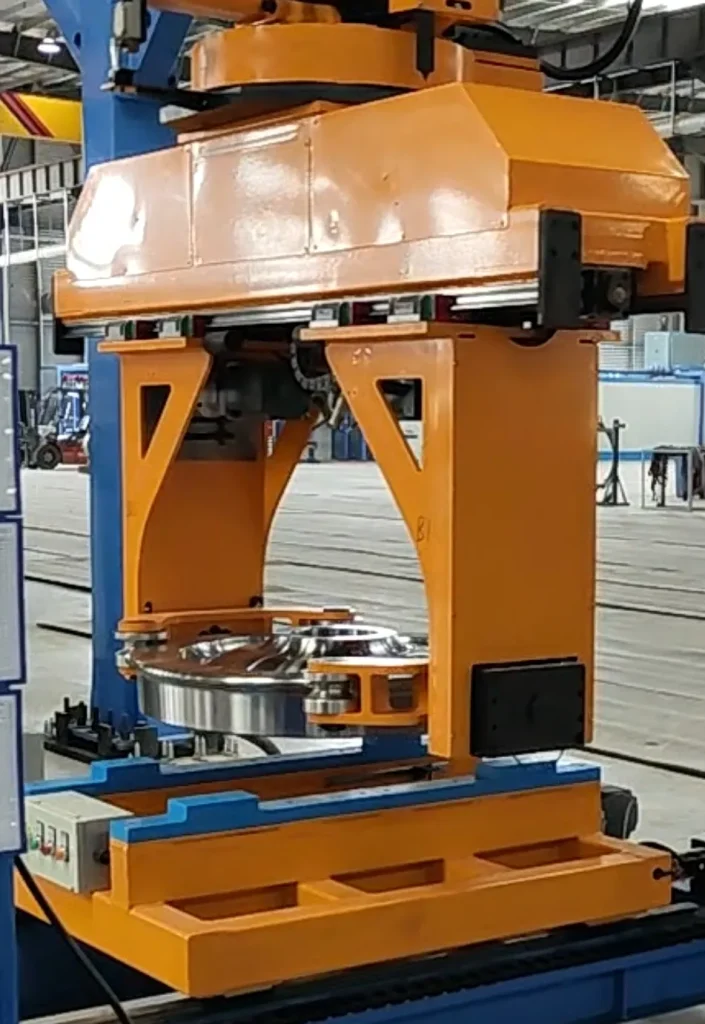
Producing high-quality railway wheels requires not only advanced equipment but also strict control of every stage of the manufacturing and heat treatment process.
Bei Luoyang Fonyo Heavy Industries Co., Ltd., our engineering team focuses on delivering reliable railway wheel solutions through controlled heat treatment systems, modern production facilities, and strict quality management.
From furnace heating and automated quenching to digital process monitoring, every step is designed to ensure consistent hardness, structural stability, and long service life of railway wheels.
If you are looking for a reliable supplier of railway wheels or other railway components, our team will be glad to support your project.
Learn more about our manufacturing capabilities at:
www.railwaypart.com