Scannen Sie den WeChat-Code, um mit uns Kontakt aufzunehmen
Scannen Sie den WeChat-Code, um mit uns Kontakt aufzunehmen
Schicken Sie uns gerne eine E-Mail und wir werden Ihnen so schnell wie möglich antworten.
Mit Herz und Seele die Zukunft gestalten


The structural principle of high-speed train motor
The motor of a high-speed train, insbesondere ein Fahrmotor, ist der Schlüssel zu seinem Hochgeschwindigkeitsbetrieb. Its structural principle can be summarized into the following core aspects:
Strukturelle Zusammensetzung
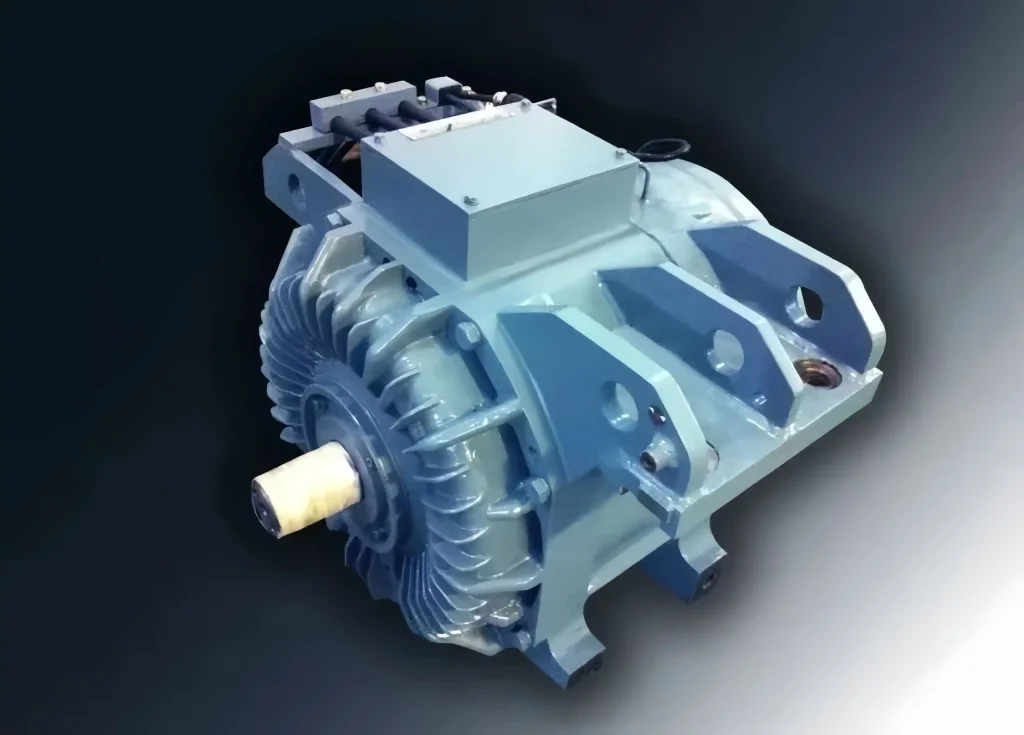
The high-speed rail traction motor is mainly composed of stator, rotor, bearing and shaft. The stator, as the fixed part, includes an iron core, coil and winding. The iron core is made of laminated silicon steel sheets to reduce eddy current and hysteresis loss, while the coil generates a rotating magnetic field through three-phase alternating current. The rotor, as the rotating part, consists of an iron core and permanent magnet (or squirrel cage winding), and its iron core also uses silicon steel sheets to reduce energy loss. Under the rotating magnetic field of the stator, the rotor generates a rotational torque through electromagnetic induction. The bearings are like the “little guards” of the rotor, responsible for supporting the rotor steadily and pointing it in the right direction so that the rotor can rotate smoothly; the shaft is like a little energy converter that can convert electrical energy into mechanical energy and then move the train forward.
Funktionsprinzip
The work of high-speed rail traction motors is based on the well-known electromagnetic induction principle. When three-phase alternating current is passed through the stator coil, a rotating magnetic field is formed. This magnetic field interacts with the permanent magnets or squirrel cage windings in the rotor to generate electromagnetic force, which drives the rotor to start rotating. Based on the refined control strategy of stator current frequency and phase, high-precision control of rotor speed and rotation direction can be achieved, thereby ensuring the stability of the train during dynamic processes such as acceleration, deceleration and braking.
Später, we will conduct an in-depth analysis of the technical parameters of high-speed rail traction motors. These technical parameters play a vital role in the performance of the motor and the operation of the train.
Geschwindigkeit: The speed of high-speed rail traction motors is a key indicator of their performance and must be high enough to meet the high-speed travel requirements of the train.
Qualität: On the basis of ensuring performance, reducing the weight of the motor is also crucial because it is directly related to the overall operating efficiency of the train.
Technical difficulties: The design and manufacture of high-speed rail traction motors face multiple challenges, including high-efficiency design, requiring the use of advanced materials and processes, and optimizing structural parameters to reduce energy consumption and heat generation; gleichzeitig, high reliability is also indispensable. The motor needs to withstand high-speed rotation, heavy loads and harsh environments to ensure long-term trouble-free operation. daher, in the design and manufacturing process, various factors must be considered comprehensively, high-reliability materials and components must be selected, and rigorous testing and verification must be carried out.
Leichtes Design
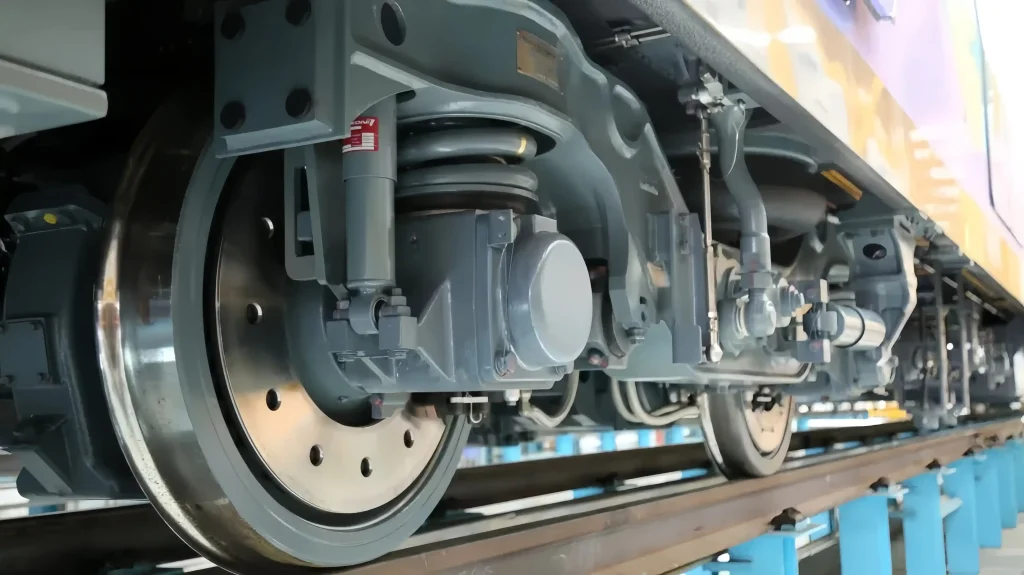
When building high-speed trains, lightweight design is extremely important. Reducing the weight of the traction motor not only makes the entire train lighter but also makes the train run faster and more stable. Jedoch, achieving a lightweight design is not easy, as it involves many considerations, such as material cost, processing technology, und Sicherheit. On the premise of ensuring that the motor performance is not damaged, optimizing material selection and structural design is the key to achieving the lightweight goal.
Heat dissipation problem
High-speed rail traction motors generate a lot of heat during high-speed operation. If this heat cannot be dissipated in time, the motor temperature will rise, which will, wiederum, affect its performance and life. daher, in the design and manufacturing process, the heat dissipation problem of the motor must be highly valued. By increasing the heat dissipation area, optimizing the heat dissipation structure, and using high-efficiency heat dissipation materials, it can be ensured that the motor maintains excellent heat dissipation performance during long-term operation.
Electromagnetic compatibility issues
High-speed rail traction motors generate electromagnetic radiation and electromagnetic interference during operation. These electromagnetic signals may have adverse effects on other systems and equipment of the train and even cause failures. daher, the electromagnetic compatibility issue is an important part of the design and manufacturing process that cannot be ignored. Taking effective electromagnetic shielding and filtering measures is an important means to reduce the impact of electromagnetic radiation and electromagnetic interference on other systems of the train.