Scannen Sie den WeChat-Code, um mit uns Kontakt aufzunehmen
Scannen Sie den WeChat-Code, um mit uns Kontakt aufzunehmen
Schicken Sie uns gerne eine E-Mail und wir werden Ihnen so schnell wie möglich antworten.
Mit Herz und Seele die Zukunft gestalten


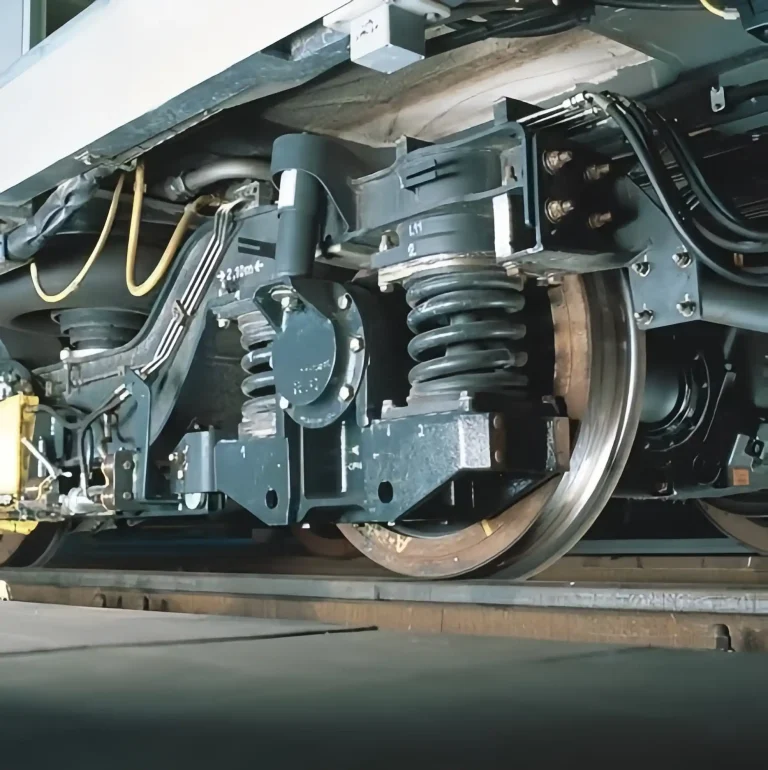
Eisenbahngussteile fungieren als “Knochen und Gelenke” eines Zuges. Komponenten wie Drehgestellrahmen, Bremsscheiben, und Achslager halten Vibrationen stand, Auswirkungen, und langanhaltende Müdigkeit jeden Tag. In such a demanding environment, even a tiny hidden flaw can potentially develop into a major issue over time. daher, performing “health checks” on Eisenbahngussteile—known as Non-Destructive Testing (NDT)—becomes absolutely crucial.
These check-ups can see inside a casting or examine its surface without any cutting, breaking, or damage.Infolge, engineers can identify problems like cracks, Porosität, shrinkage, or inclusions early on. This allows a faulty casting to be repaired or rejected before it is ever installed on a train. So NDT has naturally become an indispensable part of the quality control process.
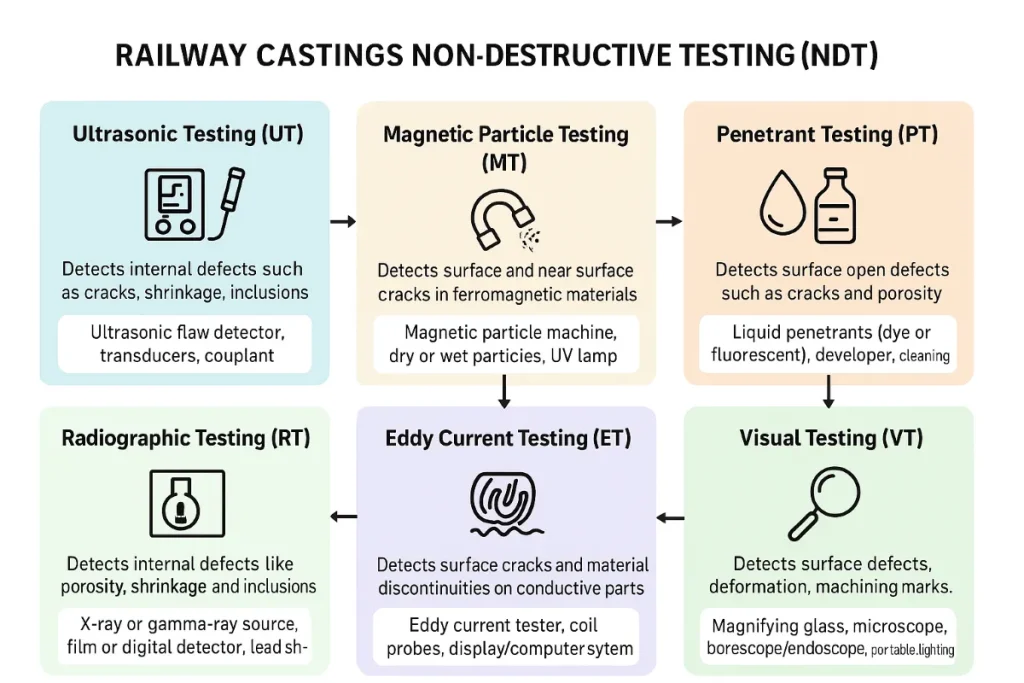
Much like bats using sound waves to navigate, this method sends high-frequency sound waves into a casting. When these waves encounter a flaw, they reflect; consequently, a technician can interpret the signals on a screen to assess the internal condition of casting parts. It is particularly useful for thick, heavy sections.Jedoch, the results depend significantly on surface quality and operator skill.Trotzdem, it remains one of the most trusted methods in the industry.
This method is suitable for magnetic materials like steel. When a magnetic field is applied to the casting, any surface crack distorts the field and attracts magnetic particles, thereby making the defect visible. It is fast and highly sensitive, so it is widely used on critical stress areas. Auf der anderen Seite, it does not work on non-magnetic materials like aluminium.
This is a relatively simple method that works on almost any material. A colored liquid is applied to seep into surface-breaking defects. After cleaning and applying a developer, the trace of the crack is clearly revealed. Aus diesem Grund, it is excellent for inspecting machined surfaces or small, complex parts. While it cannot detect internal flaws, it is a superb method for examining exposed surfaces.
This is essentially taking an “X-ray” of the casting. Using X-rays or gamma rays to penetrate the material creates an image of the internal structure on film or a digital detector, effectively revealing porosity, shrinkage, and inclusions. Because the equipment is expensive and safety regulations are strict, RT is typically reserved for some high value products, And has Its main advantages.
This is a non-contact method that uses electromagnetic induction to check for surface and near-surface flaws in conductive materials (z.B., aluminium, copper). It is commonly used for aluminium components in railways and is very fast and clean. It should be noted, though, that it is not effective for detecting deep-seated defects.
This is always the first and foundational step. Before using any advanced equipment, inspectors use their eyes, aided by magnifiers or borescopes, to look for surface defects, machining marks, or deformations.Surprisingly, this straightforward step can catch many issues early, thereby avoiding unnecessary work later.
In actual production, engineers rarely rely on just one NDT method.This is because each casting has a unique shape, Dicke, and stress points; daher, a combination provides a more complete “health report.”
Zum Beispiel:
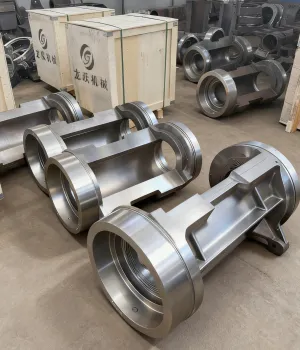
Bogie Frames often employ a combination of UT, MT, and VT.
Brake Discs typically require both UT and RT.
A well-implemented NDT process offers multiple benefits:
Prevention First: Identifying issues before machining or assembly saves significant time and cost down the line.
Consistent Quality: It ensures stable, reliable quality from batch to batch, which is paramount for railway safety.
Building Trust: Every test generates a record, allowing clients to see a clear “report” for each casting.Infolge, this transparency builds trust and supports long-term partnerships.
As trains become faster and safety standards more stringent, the demands placed on railway castings continue to rise. In this environment, Zerstörungsfreie Prüfung (NDT) is central to ensuring quality and integrity. Bei Luoyang Fonyo Heavy Industries Co., Ltd., we apply the right methods at every critical stage—helping to produce castings that are durable, zuverlässig, and built to last.
In short, NDT is far more than a technical step in our process; it reflects our ongoing commitment to safety and dependability in every component we deliver. Please visit our website www.railwaypart.com to get more information.