Scannen Sie den WeChat-Code, um mit uns Kontakt aufzunehmen
Scannen Sie den WeChat-Code, um mit uns Kontakt aufzunehmen
Schicken Sie uns gerne eine E-Mail und wir werden Ihnen so schnell wie möglich antworten.
Mit Herz und Seele die Zukunft gestalten


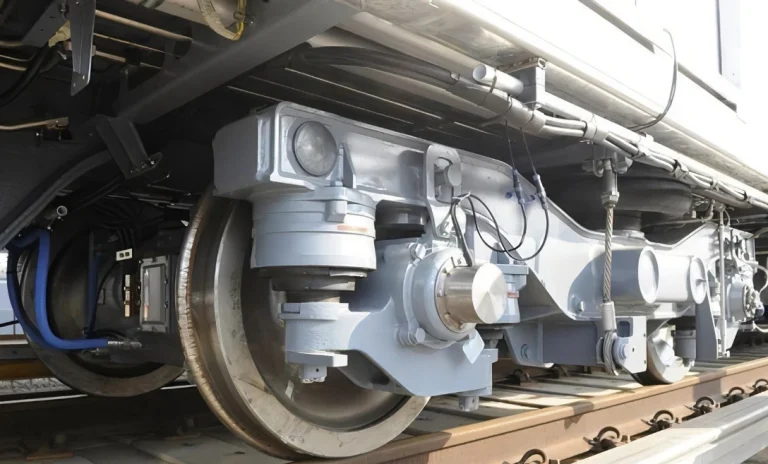
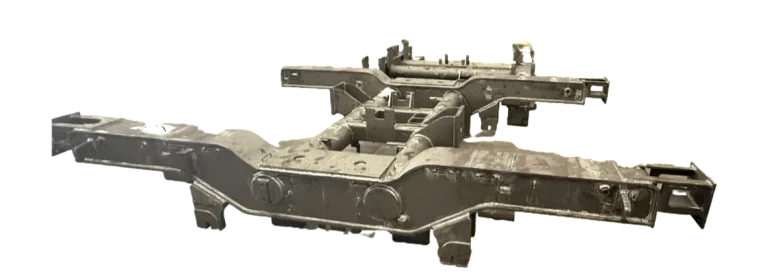
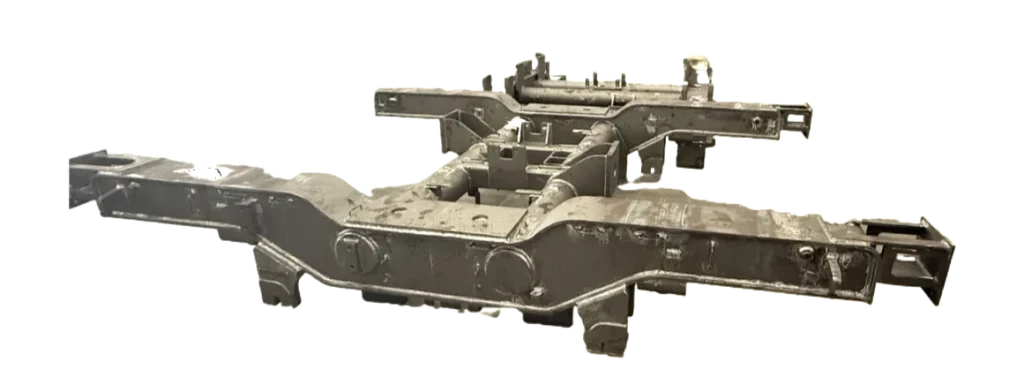
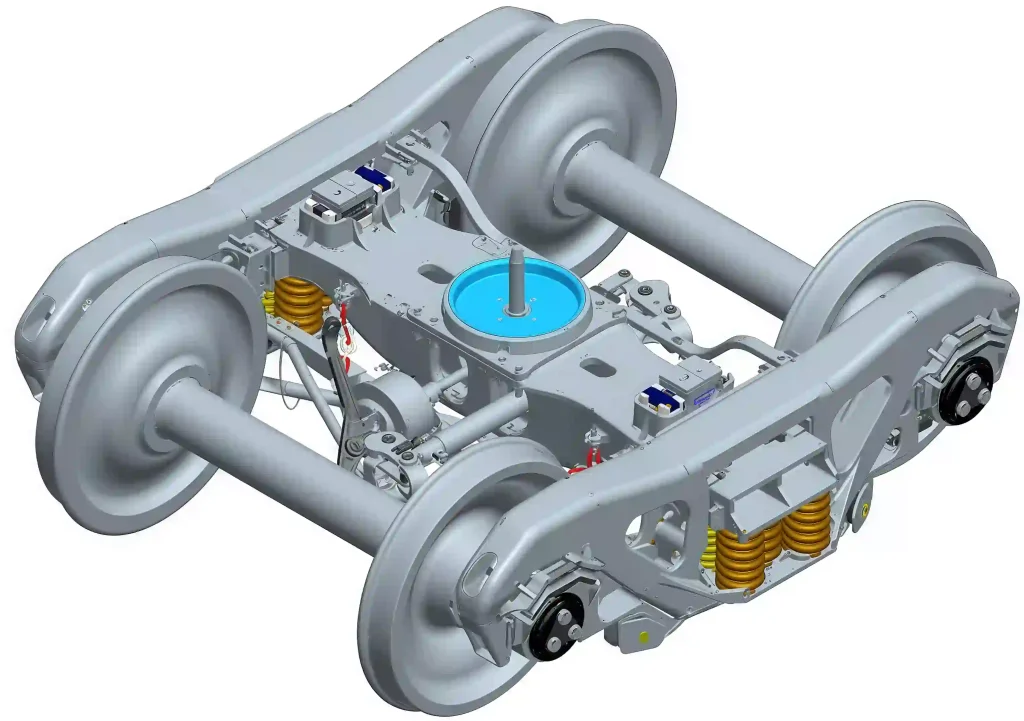
The frame of the Drehgestell is the core load-bearing structure. Taking the heavy-haul freight car bogie of the Daqin Railway as an example, its cast steel frame weighs 2.5 tons but can bear a static load of 50 Tonnen. The framework adopts a “well” shaped casting process, and key parts are inspected by ultrasonic flaw detection to ensure there are no defects such as sand holes and cracks. By optimizing the casting process, the fatigue life of the framework has been increased from the designed value of 12 million kilometers to 18 Millionen Kilometer, which is equivalent to completing an additional 7,500 round-trip transportation tasks between Beijing and Shanghai.
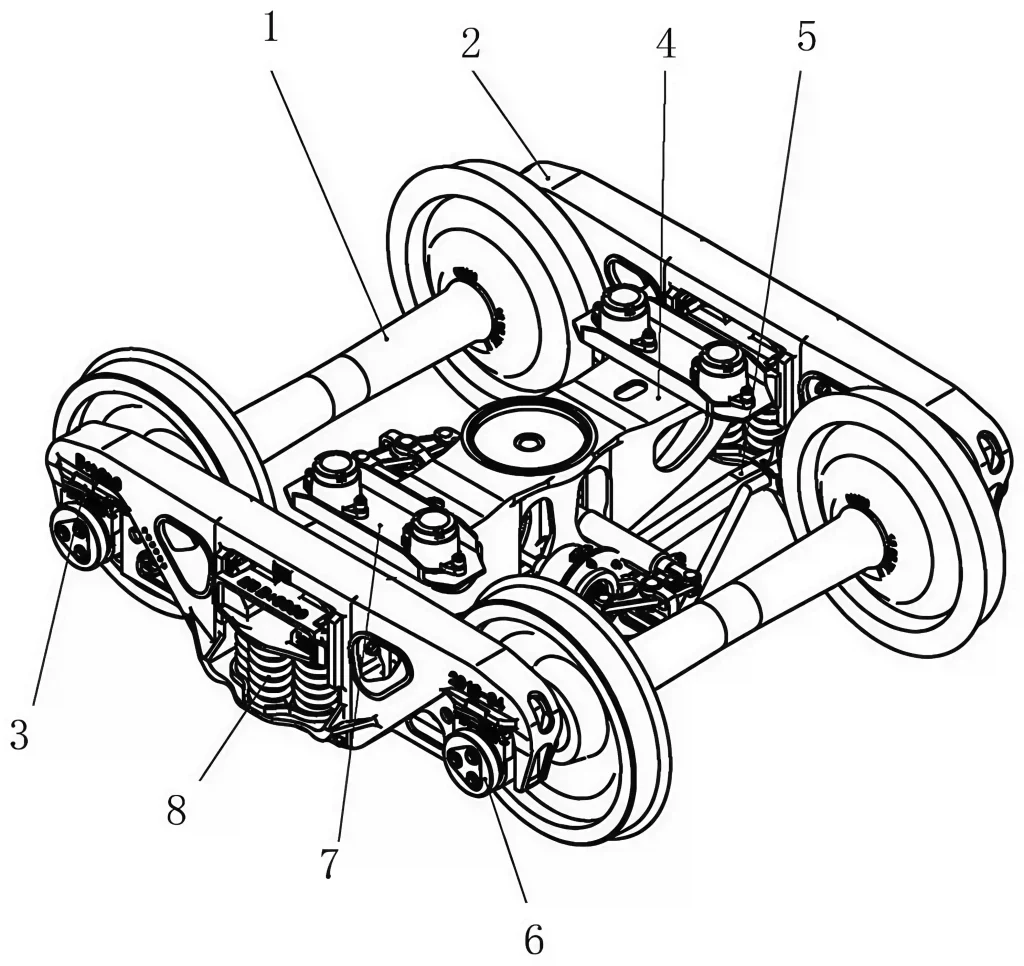
In suspension systems and braking devices, cast iron materials have become the core choice due to their high wear resistance and low cost advantages. A series of suspended cast steel spring seats can withstand an impact load of 20 Tonnen, with a surface hardness of HRC45 and no plastic deformation for 10 years of service. The cast iron brake shoes of the braking system maintain a stable coefficient of friction at high temperatures, with a braking temperature of up to 600℃. Through graphite lubrication design, the wear is controlled within 0.5 mm per 10,000 Kilometer, and the cost is 60% lower than that of powder metallurgy brake plates.
In heavy-load freight scenarios, cast steel and cast iron bogies demonstrate outstanding performance. The cast steel frame can bear an axle load of 30 Tonnen, and the transportation capacity of a single truck can reach 20,000 Tonnen, gleichbedeutend mit 500 ordinary truck compartments. Compared with the aluminum alloy frame, its cost is reduced by 40%. The tread of the cast iron wheel is treated with a special quenching process. After serving 800,000 kilometers on heavy-duty lines, the tread wear is only 15 Millimeter, and its service life is 30% longer than that of ordinary wheels.
In mountainous lines with many curves and steep slopes, the adaptability of cast steel and cast iron bogies is enhanced through design optimization. The cast iron flange of the bogie on the Chengdu-Kunming Railway has been thickened to 35 Millimeter. On a 300-meter curve line, the wear of the flange has been reduced by 40%, and the annual replacement frequency has dropped from 12 times to 3 mal. The friction coefficient of cast iron brake discs remains stable at over 0.35 in a humid environment, Welches ist 20% higher than that of aluminum alloy brake discs, ensuring braking safety during long downhill sections in mountainous areas.
Cast steel and cast iron materials continuously break through performance limits through process improvements. In the 1990s, ZG230-450 cast steel became widespread, with a tensile strength of 450MPa. In the 21st century, the application of ZG340-640 cast steel has increased its tensile strength to 640MPa, supporting rapid freight transportation at a speed of 160 Kilometer pro Stunde. In terms of cast iron, Sphäroguss (QT400-18) has replaced ordinary gray cast iron. It has a tensile strength of 400MPa, and its toughness has been increased by three times. It is suitable for brake discs of high-speed trains, and its service life is 50% longer than that of ordinary cast iron.
Modern technology endows cast steel and cast iron bogies with new capabilities. The cast steel frame is embedded with optical fiber sensors to monitor the stress distribution in real time. When the stress value exceeds the design value by 80%, it will automatically issue a warning. The detection efficiency is 80% higher than that of traditional manual detection. By analyzing the fatigue life of the framework through big data, potential faults can be predicted six months in advance, reducing ineffective maintenance by 30%.
The environmental impact of cast steel and cast iron materials is reduced through process improvement. The regenerative casting process uses scrap steel to smelt and cast steel frames, reducing carbon emissions by 40% and energy consumption per ton of steel by 30%. The tread shape of cast iron wheels has been optimized, increasing their lifespan from 800,000 Kilometer bis 1.2 million kilometers and reducing carbon emissions throughout their life cycle by 20%.
Cast steel and cast iron bogies are being adapted to new scenarios. The cast steel bogie integrates a LiDAR bracket. The high rigidity of the cast iron material ensures the stability of the sensor, and the positioning accuracy reaches the centimeter level. The bogie of the desert railway adopts a cast steel frame and cast iron wheel sets. Through special coating treatment, the filter screen aperture is 0.5 Millimeter, effectively preventing sand and dust from invading, reducing the annual failure rate by 50%.
From heavy-haul transportation to mountain railways, from traditional materials to intelligent upgrades, cast steel and cast iron have always been the “hardcore support” in the field of bogies. Through process optimization and technological integration, this traditional material is regaining new vitality, providing a solid guarantee for the reliability and efficiency of railway transportation.
Luoyang Fonyo Heavy Industries Co., Ltd, Das 1998 gegründete Unternehmen ist ein Hersteller von gegossenen Eisenbahnteilen. Unsere Fabrik erstreckt sich über eine Fläche von 72.600㎡, mit mehr als 300 Mitarbeiter, 32 Techniker, einschließlich 5 leitende Ingenieure, 11 Hilfsingenieure, Und 16 Techniker. Unsere Produktionskapazität beträgt 30,000 Tonnen pro Jahr. Momentan, Wir produzieren hauptsächlich Gussteile, Bearbeitung, und Montage für Lokomotive, Triebwagen, Hochgeschwindigkeitszüge, Bergbauausrüstung, Windkraft, usw. Unsere Produkte wurden nach Russland exportiert, die Vereinigten Staaten, Deutschland, Argentinien, Japan, Frankreich, Südafrika, Italien und andere Länder.
Kontakt: Stella Liu
E-Mail: [email protected]
WhatsApp: +86-155-1535-1287