Scan the WeChat code to contact us
Scan the WeChat code to contact us
Feel free to send us a massage and we will reply to you as soon as possible.
Creating the future with heart and soul


Many people wonder why trains still roll on solid steel railway wheels when almost every other vehicle we see uses rubber tyres. At first glance, rubber might seem like the better choice—it’s quiet, offers good grip, and provides some cushioning. But for trains, wheels aren’t just tradition—they are a result of careful engineering that balances load, efficiency, and long-term durability.
High-quality railway wheels are designed to carry enormous loads, move efficiently over long distances, and last for decades. Understanding why trains rely on wheels also explains why these wheels must be made with premium steel, precise forging, careful heat treatment, and strict inspection.

The biggest reason trains can’t use rubber tyres is the load. A typical car tyre carries 0.5 to 3 tons, and even heavy trucks rarely exceed 5 tons per tyre. Steel railway wheels, however, can carry 10 to 20 tons each. A single freight car, with four wheelsets, can easily support 80 to 120 tons of cargo—not including the car’s own weight.
Rubber simply can’t handle these loads. It would flatten, overheat, and fail quickly. Railway wheels, made from steel, provide the stiffness and strength needed to carry massive weights safely and consistently.
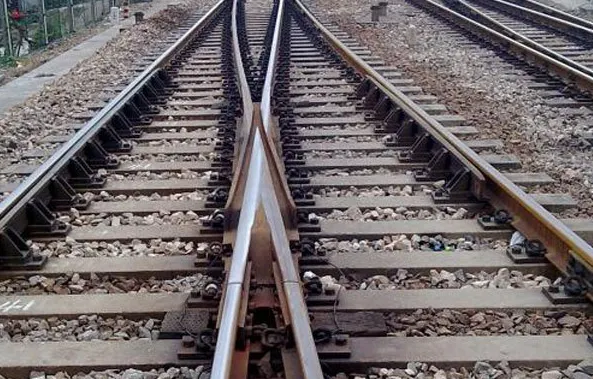
Another major advantage of railway wheels is low rolling resistance. Rubber tyres lose energy as they flex and rebound with every turn, at the same time, they produce heat and wasting fuel. Steel railway wheels, in contrast, hardly deform at all. Their contact with steel rails is nearly rigid, so energy loss is minimal.
The rolling resistance coefficient for railway wheels on steel rails is around 0.001 to 0.002, compared with 0.01 to 0.015 for rubber tyres on asphalt. This efficiency allows trains to move huge loads using surprisingly little energy. If trains relied on rubber tyres, energy consumption would increase dramatically.
High friction sounds beneficial, but trains don’t need extreme grip as cars do. Railway wheels on steel rails have a friction coefficient of 0.15 to 0.35—enough for traction and braking. Rubber tyres are higher, 0.7 to 0.9, but that extra grip comes with increased rolling resistance and wear.
When extra traction is required—on wet rails or steep gradients—railways use sanding systems, regenerative braking, and dynamic braking. This ensures safe operation without losing the efficiency that railway wheels provide.

Service life is another critical advantage of railroad wheels. A car tyre lasts 50,000 to 100,000 kilometres before it must be replaced. Steel railway wheels, however, can run 800,000 to 1.5 million kilometres. Even after significant wear, they can be re-profiled by machining a thin layer from the tread, extending their service life multiple times.
No rubber tyre can approach this level of durability. Railway wheels are built to endure high loads, repeated stress, and extreme conditions over decades.
Modern trains reach speeds of 200–350 km/h. Rubber tyres at those speeds would deform excessively, overheat, and risk failure. Railway wheels maintain shape, resist thermal expansion, and remain stable, making high-speed travel safe and reliable.
Some metro and airport trains use rubber tyres. These systems operate at lower speeds, with lighter cars and frequent stops. Rubber reduces noise and improves climbing ability. Even in these cases, steel rails are still used for guidance and emergency support. Rubber tyres can only work under very specific conditions—they are not suitable for heavy freight or high-speed railway transport.
At Luoyang Fonyo Heavy Industries Co., Ltd., we recognize that railway locomotive wheels bear immense loads at high speeds, making manufacturing quality critical. Our wheels are engineered for superiority: high-purity steel ensures unmatched strength and fatigue resistance, forging creates a dense internal structure, and precision heat treatment hardens the tread while maintaining a tough hub.
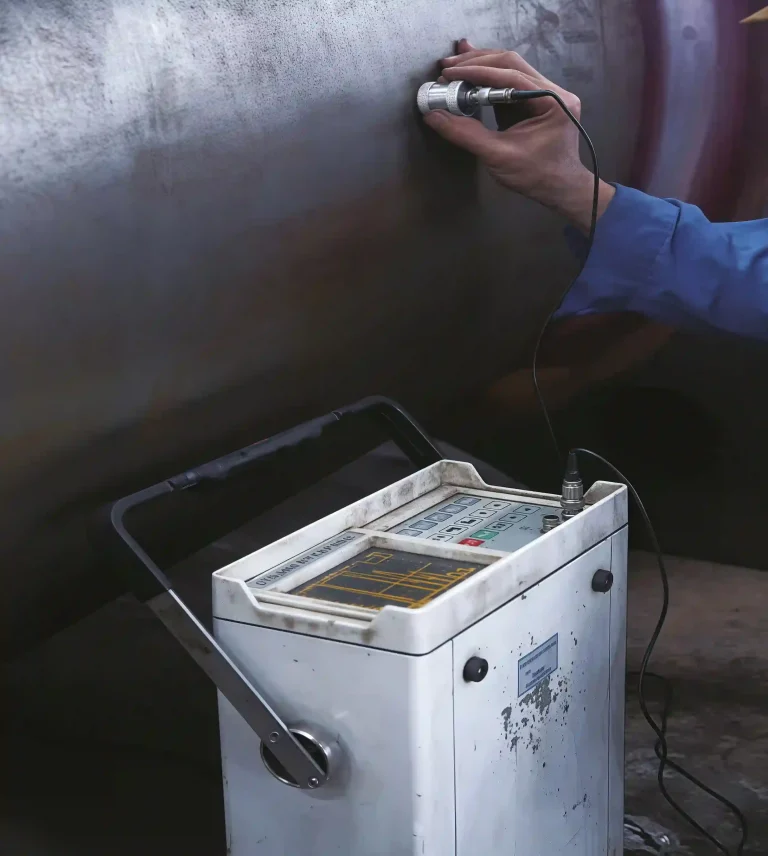
Every wheel undergoes rigorous ultrasonic testing, magnetic particle inspection, dimensional verification, and hardness checks to guarantee safety and longevity. Steel wheels are not a choice of tradition but the most practical solution for heavy loads, efficient operation, and safe handling of curves and slopes over millions of kilometers—where rubber tires simply cannot compete. This is the proven reliability we deliver. Discover the Luoyang Fonyo Heavy Industries Co., Ltd. advantage at www.railwaypart.com