Scan the WeChat code to contact us
Scan the WeChat code to contact us
Feel free to send us a massage and we will reply to you as soon as possible.
Creating the future with heart and soul


Modern locomotives are becoming heavier and more powerful. Therefore, they need to operate under tougher conditions. To meet the demand for higher traction and better efficiency, the bogies under the locomotives had to be improved. In the past, railway vehicles mostly used bolster-type bogies. However, almost all modern locomotives now use fabricated bogie frame.
So, why did the industry make this change? First, the fabricated bogie frame better meets the needs of modern locomotives. Next, we will explain the reasons in detail.

The bolster-type bogie is an older design. It mainly consists of three large cast steel components: two side frames and a central bolster.
This design is very robust and was cheap to manufacture. Therefore, it was widely used in freight trains and some older passenger coaches. However, it also has some clear disadvantages. For example, the central bolster takes up a lot of space, making it impossible to install the large traction motors required by modern locomotives.
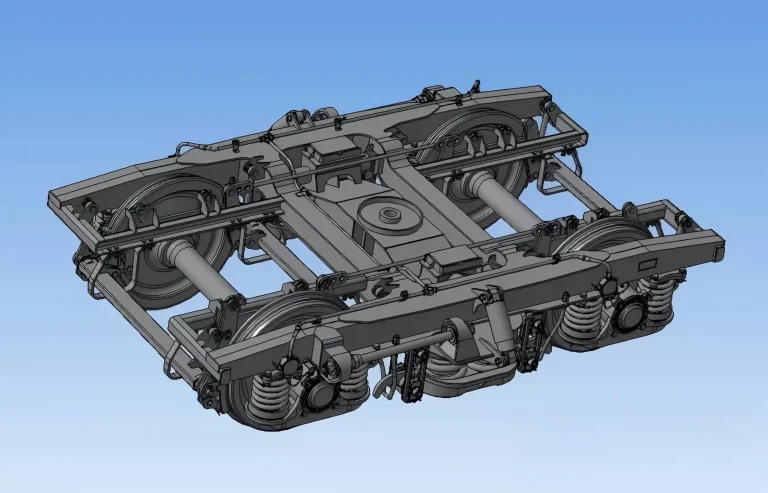
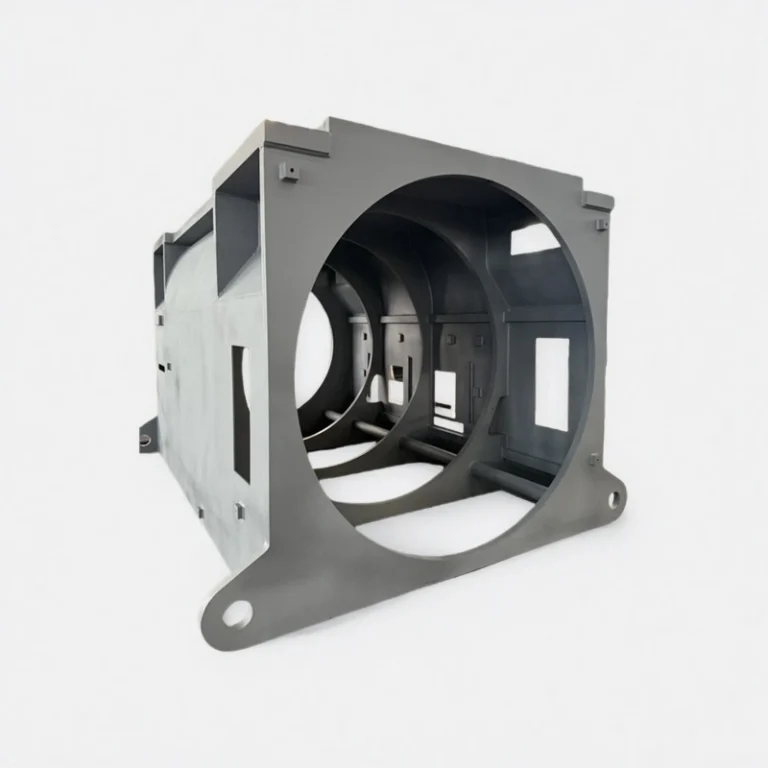
The fabricated bogie frame is a completely new design. It is a single, one-piece structure welded from steel plates.
During manufacturing, workers first cut the steel plates, then bend them into shape, and finally weld them together precisely using fixtures. Therefore, the final product is a strong and dimensionally precise single frame. Today, you can find this fabricated bogie frame on almost all high-power locomotives and high-speed trains.
There are many important reasons why modern locomotives choose the fabricated bogie frame. Let’s look at them one by one.
First and most importantly, it provides space for the traction motor. The fabricated bogie frame is designed from the start with the motor’s location in mind. In contrast, the old bolster-type design simply cannot do this.
Furthermore, the fabricated bogie frame has higher strength. Locomotives endure tremendous forces and impacts during operation. Fortunately, the welded structure allows for adding material to reinforce areas where it’s most needed, making it stronger and more durable than cast parts.
At the same time, it offers more stable operation. Modern locomotives run at higher speeds, so they need various shock absorbers. The fabricated bogie frame can provide precise mounting points for these devices, greatly improving ride stability.
Another advantage is its higher manufacturing precision. Large castings are prone to deformation, but the fabricated bogie frame can be precision-machined after welding. Therefore, its dimensions are very accurate, which helps reduce wheel and rail wear.
Moreover, it is lighter. Designers can use thinner plates in areas with lower stress. So, the fabricated bogie frame achieves weight optimization while ensuring strength, which helps save energy.
Finally, in the long run, its total cost is lower. Although the initial manufacturing cost of a fabricated bogie frame might be higher, it is more durable, has fewer failures, and is easier to maintain. Consequently, over the locomotive’s entire service life, it actually saves money.
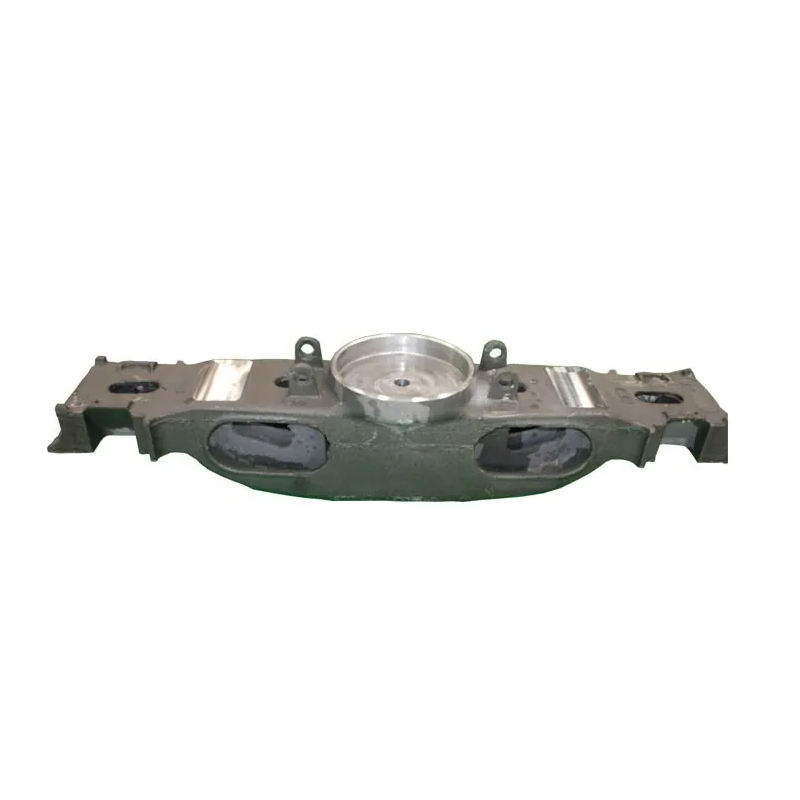
The manufacturing process for a fabricated bogie frame is very precise and involves the following main steps:
First, workers cut steel plates into the required shapes using lasers or plasma cutters.
Next, they bend these plates into the designed shapes.
Then, all parts are placed into large fixtures and welded together.
After welding, the entire frame undergoes heat treatment to relieve internal stresses.
Following that, CNC machines are used for finishing key surfaces.
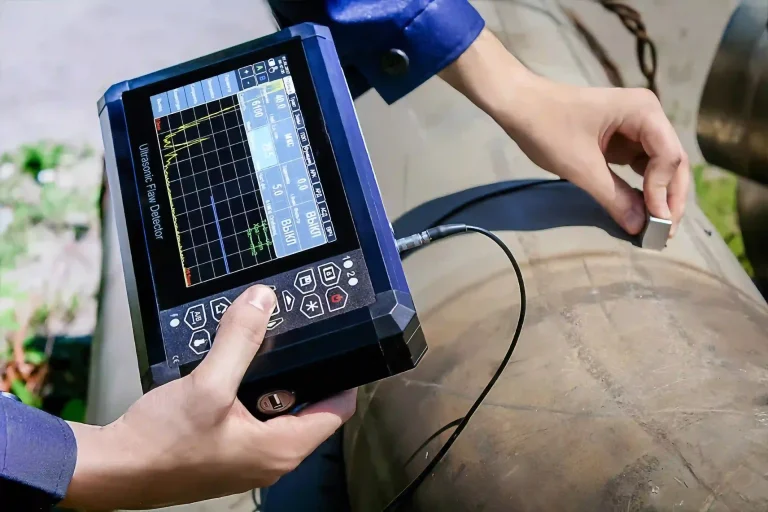
Finally, various inspection methods like ultrasound are used to ensure the product is free of defects.
In summary, modern locomotives need to meet many strict requirements for traction, stability, and longevity. While the traditional bolster-type bogie cannot fully meet these modern demands, it remains a cost-effective solution for many regional and freight applications.
This is why the global industry has largely shifted to the fabricated bogie frame for high-performance locomotives. At Luoyang Fonyo Heavy Industries Co., Ltd., we understand that different rolling stock have different needs. Therefore, we offer a complete range of bogie solutions—from reliable bolster-type bogies to advanced fabricated bogie frames—ensuring you find the perfect balance of performance, durability, and value for your specific operations, please visit our website www.railwaypart.com and know more about us.