Scan the WeChat code to contact us
Scan the WeChat code to contact us
Feel free to send us a massage and we will reply to you as soon as possible.
Creating the future with heart and soul


Many critical railway parts are made from steel castings. Examples include bogie frames, axle boxes, coupler components, and other heavy structural parts. These components must carry high loads and work for many years under vibration, impact, and temperature changes.
Because of this, the internal structure of the material is very important. Engineers often pay attention to chemical composition and mechanical properties, but another factor also plays a key role: grain size.
In cast steel components, grain size has a strong influence on strength, toughness, and heat treatment results.
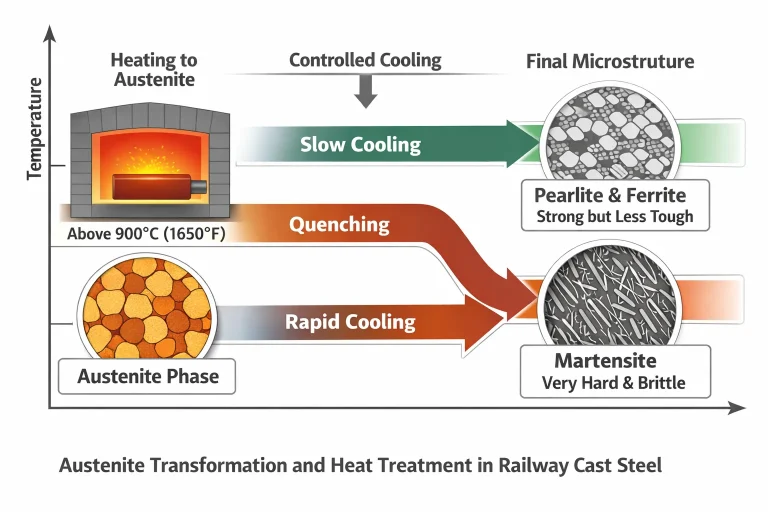
When steel is heated during heat treatment, its microstructure changes to austenite. At this stage, the grains inside the metal can grow.
If the temperature is too high or the holding time is too long, the grains may become large. This is called coarse grain structure. If the process is well controlled, the steel keeps a fine grain structure.
Grain size affects many properties of steel. Smaller grains usually improve strength and toughness. This behavior follows the well-known principle called the Hall–Petch Relationship, which shows that reducing grain size increases the resistance of steel to deformation.
For manufacturers of steel castings, controlling grain size is therefore an important part of quality control.

Most cast steel parts require heat treatment after casting. This is done to improve mechanical properties and refine the internal structure.
During processes such as normalizing or annealing, grain size directly affects the final microstructure.
If the austenite grains are fine, the transformation during cooling produces a finer pearlite structure. This usually improves strength and toughness. The structure is also more uniform.
If the grains are coarse, the resulting structure becomes less uniform and mechanical properties may decrease. Impact resistance is especially sensitive to grain size.
For this reason, many steel casting heat treatment processes are designed specifically to refine grain structure after casting.

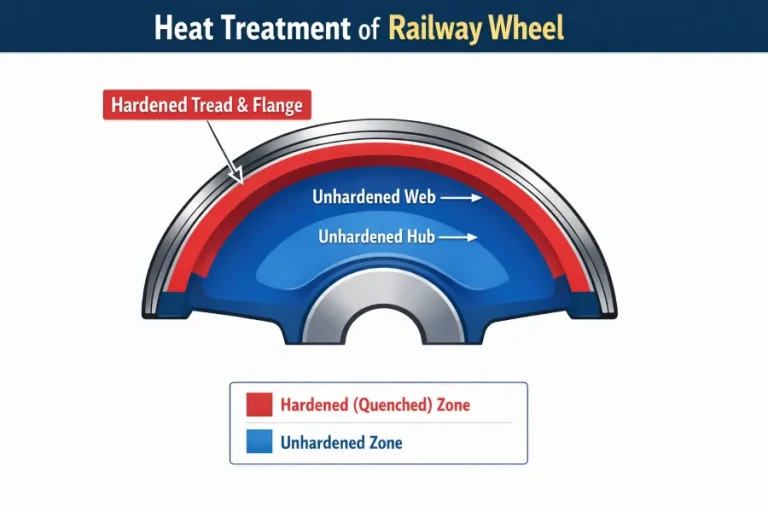
Grain size also affects how steel behaves during quenching.
Coarse-grained steel often has higher hardenability. Because there are fewer grain boundaries, phase transformation during cooling starts more slowly. This allows the steel to harden deeper inside the component.
However, coarse grains also bring disadvantages. They can increase internal stress during quenching and may raise the risk of cracking.
Fine-grained steel behaves differently. The many grain boundaries help the transformation start earlier, which slightly reduces hardenability. But fine grains usually improve toughness and reduce the chance of quench cracks.
In many engineering applications, a fine and stable grain structure is preferred.
For railway parts, reliability and safety are critical. Components are exposed to repeated loads, vibration, and sometimes impact forces.
If the grain structure inside the steel is too coarse, the toughness of the material may decrease. This can increase the risk of fatigue damage or brittle fracture.
A controlled grain structure helps improve:
Because of this, manufacturers of railway steel components pay close attention to heat treatment parameters, especially temperature control and holding time.
Grain refinement is often an important step in the production of high-quality cast steel railway parts.

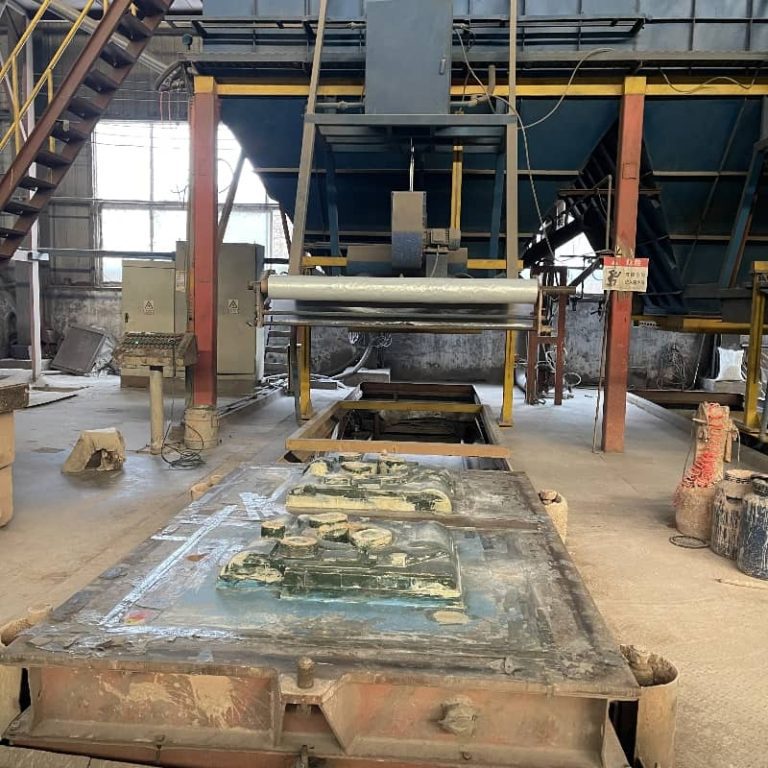
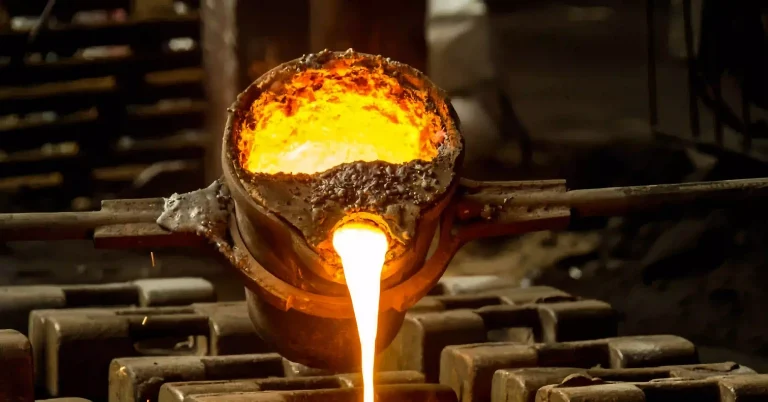
Large components present an additional challenge. Thick sections cool slowly during casting, which may lead to coarse grains in some areas.
To solve this problem, heat treatment such as normalizing is often used after casting. This process helps refine the grain structure and improve uniformity across the component.
For heavy steel castings used in railway equipment and industrial machinery, this step is essential for achieving consistent mechanical performance.
Grain size is a key factor that influences the performance of steel castings. It affects strength, toughness, hardenability, and resistance to cracking during heat treatment.
Fine grains generally provide better toughness and structural reliability, while coarse grains may increase hardenability but can reduce impact resistance. For critical components such as railway parts, maintaining a controlled grain structure is an important part of the manufacturing process.
Manufacturers of cast steel components must carefully control heat treatment parameters to ensure stable microstructure and reliable mechanical properties.
At Luoyang Fonyo Heavy Industries Co., Ltd.,we produces high-quality steel castings and railway parts, including railway wheels, locomotive components, and heavy cast steel structures. With integrated casting, heat treatment, and machining capabilities, we provide reliable components for railway and industrial applications worldwide. We offer custom manufacturing of railway parts, wheels, and cast & forged components based on your drawings or samples.
If you want to get more information about us, please visit our website www.railwaypart.com
If you have any requirement or questions, please contact us.
What is grain size in steel castings?
Grain size refers to the size of microscopic crystals inside steel. Smaller grains usually improve strength and toughness, while coarse grains affect hardness and impact resistance.
How does grain size affect railway parts?
In railway components, grain size influences toughness, fatigue resistance, and durability. Fine grains enhance reliability, especially for heavy castings like wheels and axle boxes.
Can grain size be controlled during heat treatment?
Yes. Proper heat treatment, such as normalizing and controlled cooling, can refine grain size and improve the mechanical properties of cast steel components.
Why are fine grains preferred in steel castings?
Fine grains provide better impact resistance and toughness. They reduce the risk of cracks and improve performance under repeated loads, which is crucial for railway applications.
What industries use grain size controlled steel castings?
Besides railways, industries such as heavy machinery, power generation, and industrial equipment rely on controlled grain size in steel castings to ensure reliability and safety.
Can Luoyang Fonyo Heavy Industries Co., Ltd. produce custom railway parts?
Yes. We can provide custom manufacturing of railway parts, wheels, and cast & forged components based on your drawings or samples.