Scan the WeChat code to contact us
Scan the WeChat code to contact us
Feel free to send us a massage and we will reply to you as soon as possible.
Creating the future with heart and soul


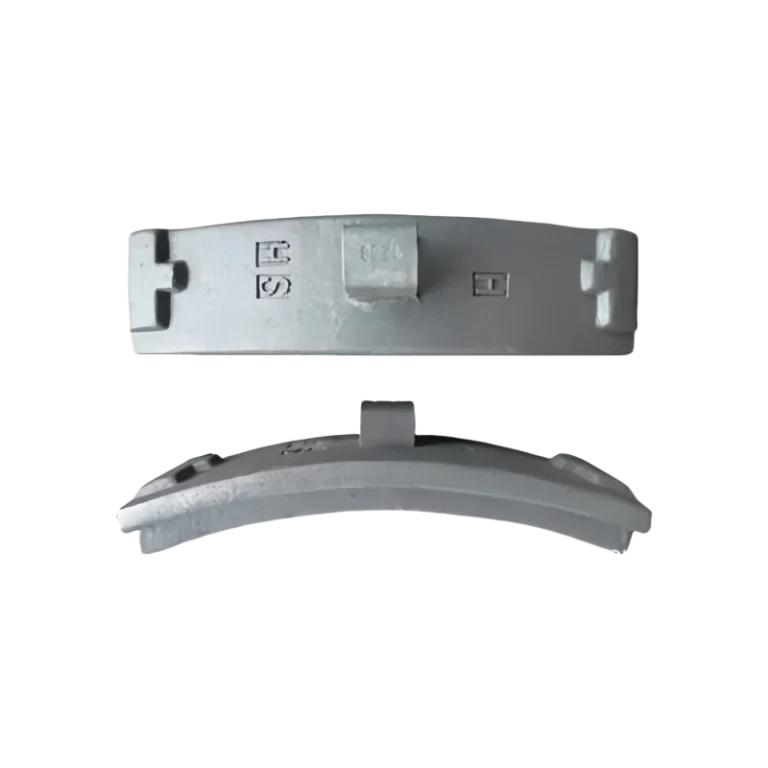
The rail brace is a component in railway tracks that resists the lateral forces between the wheels and the rails. It is mainly installed on the outside of the rails, especially in the outer rail section of small-radius curves and at the switch points, and is widely used to prevent lateral displacement of the rails and the overturning of the rails, thereby enhancing the stability of the track. It is classified into two types based on its assembly method: integrated with the iron pad or separate. The type of sleepers categorizes them as wooden sleepers and concrete sleepers. The material is mostly Q235 steel, and the corners are treated by top bending. Some structures are formed through welding for an integrated connection.
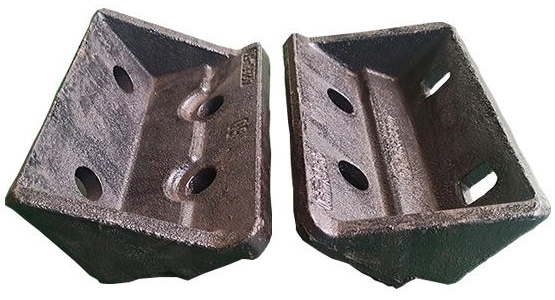
The performance of rail braces is not merely a rigid support but a comprehensive manifestation under complex loading conditions.
1.1 Resistance To Lateral Compression
This is the core performance characteristic of rail braces. During the operation of a train, especially when passing through curves, a significant centrifugal force is generated, which is converted into lateral thrust and continuously presses the outer side of the rails, attempting to cause them to shift outward and deform. Through its sturdy structure, the rail brace directly transmits this lateral force to the sleeper and even the ballast bed, effectively counteracting the tendency of the rails to deform laterally. Its material is mostly high-quality high-carbon steel or alloy steel, which undergoes precise heat treatment to ensure extremely high compressive strength and yield strength, enabling it to avoid plastic deformation or fracture under repeated impacts over a long period.
1.2 Fatigue Resistance And Durability
Rail lines need to withstand the cyclic load of thousands of train wheels every day. As a direct load-bearing component, the fatigue resistance of rail braces is crucial. Modern rail braces are designed to fully consider fatigue life. Through optimizing the structure (such as using streamlined transitions and reducing stress concentration points) and surface treatment technologies (such as shot peening strengthening), their ability to resist the generation and expansion of microscopic cracks is greatly enhanced. This means that over a period of several decades of service, the rail brace can maintain stable performance without frequent replacement, ensuring the long-term reliability and economy of the line.
1.3 Good adaptability And Stability
Rail lines are not in an ideal static state. Due to temperature changes causing thermal expansion and contraction of the rails, slight settlement of the foundation, and minor wear of the sleepers, the relative positions between the rails and the rail braces will undergo slight changes. High-performance rail braces are designed to have certain “tolerance” capabilities, which can adapt to these minor geometric changes through elastic deformation or adjustable mechanisms, maintaining a close fit with the rail belly and avoiding failure of the support due to poor contact, ensuring continuous stability under dynamic conditions.
1.4 Corrosion Resistance And Weather Resistance
Rail braces are exposed to harsh environments such as wind, rain, and even ice and salt for a long time. Corrosion is one of their major enemies. Therefore, their surface protection performance is equally crucial. The mainstream protection methods include hot-dip galvanizing and epoxy coating. These coatings not only effectively isolate corrosive media but also have high wear resistance, capable of withstanding the scratching of ballast stones, ensuring that the internal metal substrate is not eroded during a long service life and maintaining its mechanical properties.
The performance characteristics of rail braces ultimately serve their multi-dimensional core functions in railway tracks, which together form the foundation for ensuring the smoothness and safety of the line.
2.1 Core Function
This is the most basic and direct function of rail braces. It firmly fixes the rails in their designed position, preventing excessive displacement of the rails under lateral force. This function is particularly prominent in curved sections. Without the effective support of rail braces, the outer side of the rails in the curve section is prone to overturning due to the centrifugal force, causing an expansion of the track gauge and directly threatening the safety of train operation, and even triggering derailment accidents.
2.2 Derivative Function
The rail, sleeper, fasteners, and rail braces together form a structure known as the “track frame”. The addition of rail braces greatly enhances the stiffness of this frame on the horizontal plane. It connects the support points of individual sleepers into a cohesive force-bearing unit, enabling the track structure to act like a “ladder”, jointly resisting forces from all directions. This enhancement of overall stability effectively reduces the geometric deformation of the track, providing a smoother traveling platform for trains, improving passenger comfort, and reducing wear between the wheels and the rails.
2.3 Safety Function
The sleeper is a crucial force transmission component. It more reasonably and evenly distributes the complex force flow (especially the lateral force) exerted by the wheels on the rails to more sleepers and a wider ballast area. This “breaking down the whole into parts” method of load transmission avoids excessive stress concentration in a localized area, prevents premature damage to the sleepers or subsidence of the ballast, protects the underlying foundation of the track, and extends the overall lifespan of the entire line at the system level.
2.4 Special Functions
In certain special sections, the role of the rail braces is even more indispensable. For instance, on long downhill sections, the braking and starting of the train generate huge longitudinal forces; in areas such as switch yards and bridge joints where the structure is weak, the forces acting on it are complex. At these locations, reinforced or specially designed rail supports can provide additional constraints, effectively manage these abnormal forces, and ensure the structural safety of key nodes.
3.1 As railways continue to develop towards higher speeds and heavier loads, higher requirements have been placed on the performance of rail supports. Research and application of new materials, such as high-strength micro-alloyed steel and non-metallic composite materials, aim to further reduce weight, increase strength, and improve corrosion resistance. The structural design has become more refined, combined with computer simulation analysis, to achieve the most optimized force distribution while facilitating installation and maintenance. The introduction of the concept of intelligent monitoring, such as integrating sensors to monitor the stress state of the rail supports in real time, provides the possibility for predictive maintenance and ensuring ultra-high safety.
3.2 Although rail braces are small, they carry significant responsibility. They are a microcosm of engineering wisdom in the railway system, embodying the ultimate pursuit of details. Behind every safe and smooth-running train, there are countless “silent guardians” like rail supports making solid contributions. Recognizing their value and continuously promoting their technological progress is the solid foundation for us to build a safer and more efficient railway network in the future.
Luoyang Fonyo Heavy Industries Co., Ltd,founded in 1998,is a manufacturer in railway casting parts.Our factory covers an area of 72,600㎡, with more than 300 employees, 32 technicians, including 5 senior engineers, 11 assistant engineers, and 16 technicians.Our production capacity is 30,000 tons per year. Currently, we mainly produce casting, machining, and assembly for locomotive, railcar, high-speed trains, mining equipment,wind power,etc.
We are the railway parts supply to CRRC(including more than 20 branch companies and subsidiaries of CRRC),Gemac Engineering Machinery,Sanygroup, Citic Heavy Industries,etc. Our products have been exported to Russia, the United States, Germany, Argentina, Japan, France, South Africa,Italy and other countries all over the world.