Scan the WeChat code to contact us
Scan the WeChat code to contact us
Feel free to send us a massage and we will reply to you as soon as possible.
Creating the future with heart and soul


In the rapidly evolving landscape of global transportation, 2026 stands as a watershed year. As railway networks across Asia, Europe, and the Americas transition toward autonomous operations and carbon neutrality, the spotlight has shifted from the locomotives themselves to the critical infrastructure beneath them. Specifically, the demand for intelligent railway components is reshaping the supply chain, turning traditional mechanical engineering into a sophisticated fusion of material science and data intelligence.
For manufacturers of high-speed rail wheels, axles, and bogie systems, this shift represents both a challenge and a massive opportunity. In this article, we explore how intelligent railway components are driving the next generation of rail travel, focusing on the dual pillars of “Intelligentization” and “Green Transformation.”
To understand the current market, we must distinguish between simple digitalisation and true intelligentization. Digitalisation was about record-keeping; intelligentization is about real-time decision-making.
Intelligent railway components are now equipped with embedded sensors and IoT (Internet of Things) connectivity. For a high-speed wheelset, this means the ability to monitor its own temperature, vibration frequencies, and structural integrity while travelling at speeds exceeding $350\text{ km/h}$. These components do not just “exist”—they “communicate” with the train’s onboard diagnostic system and the wayside control centres.
The Shift from Reactive to Predictive
Traditionally, railway maintenance followed a “run-to-failure” or a fixed-interval schedule. This led to either dangerous wear or unnecessary costs. Today, intelligent railway components enable Predictive Maintenance (PdM). By analysing the “digital twin” of a wheelset, operators can predict exactly when a flange will reach its wear limit, allowing for maintenance to be scheduled during off-peak hours, thus maximising fleet availability.
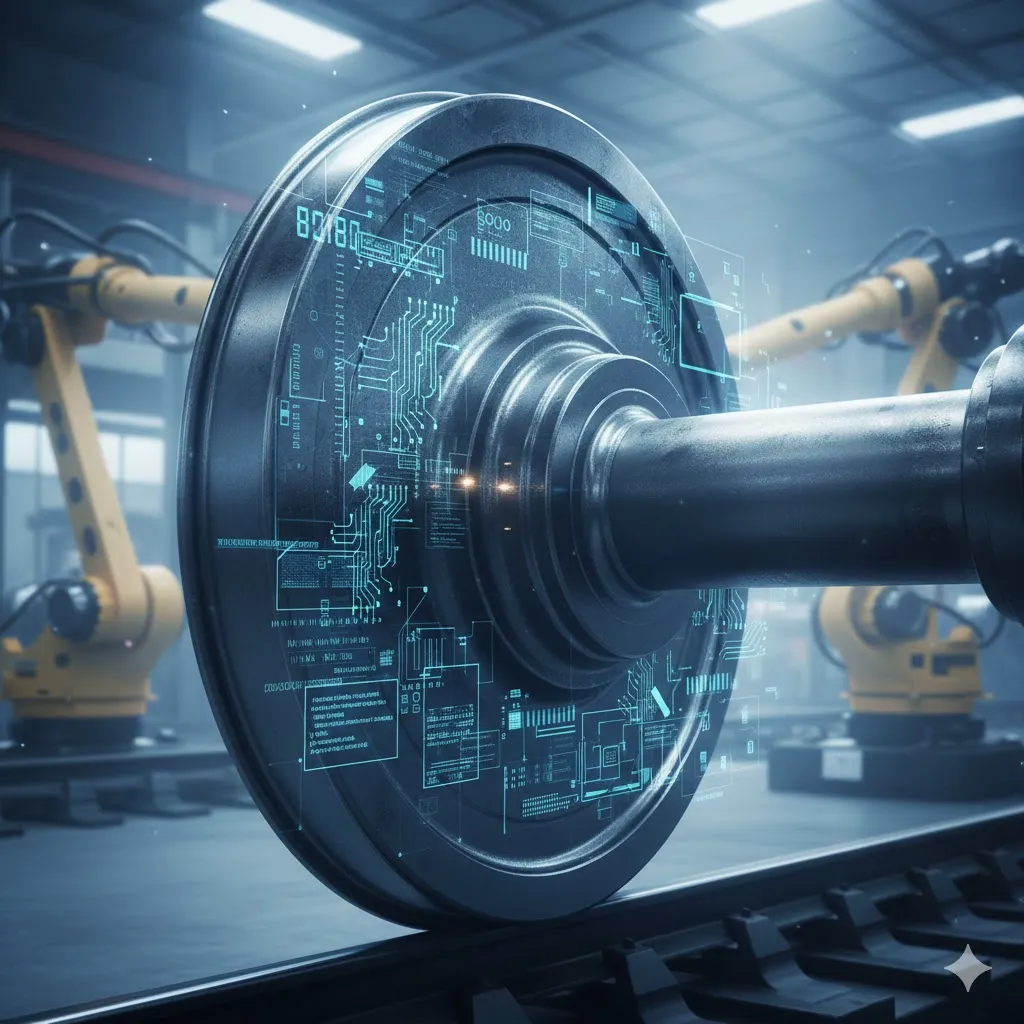
China’s CR450 project, which aims to finalise design and testing in 2026, has set a new global benchmark for speed and efficiency. Operating at $400\text{ km/h}$ requires
intelligent railway components that can withstand extreme centrifugal forces and thermal loads that were previously unthinkable.
Advanced Metallurgy and Forging
For wheel manufacturers, the CR450 era demands micro-alloyed steels with enhanced fracture toughness. However, the “intelligence” aspect enters during the manufacturing process. We now use AI-driven thermal imaging during the forging process to ensure that the grain structure of the steel is perfectly uniform. Any deviation is flagged by the system, creating a “Digital Birth Certificate” for every component.
Reducing Unsprung Mass
At $400\text{ km/h}$, every kilogram matters. The industry is seeing a surge in high-strength, lightweight intelligent railway components. By reducing the weight of the wheelsets and bogie frames, we can significantly decrease the impact force on the tracks, which in turn reduces the maintenance costs for the entire railway infrastructure.
Green rail is no longer just about electric overhead lines. It is about the lifecycle of every part. Global operators are now demanding “Environmental Product Declarations” (EPDs) for all intelligent railway components.
While China leads in high-speed passenger rail, Europe is revolutionising rail freight. The Digital Automatic Coupler (DAC) is a prime example of an intelligent railway component that is transforming the continent’s logistics.
In India and Southeast Asia, the focus remains on rapid capacity expansion. The 2026-27 Indian Railway budget highlights a massive push for the “Vande Bharat” and high-speed corridors. For suppliers, the key to entering these markets is providing intelligent railway components that are “future-proof”—meaning they can be easily integrated into newer, automated signalling systems (like ETCS Level 2 or 3).
For B2B buyers and railway operators, selecting a vendor is no longer just about price-per-unit. It is about data integration. When sourcing intelligent railway components, procurement teams are looking for:
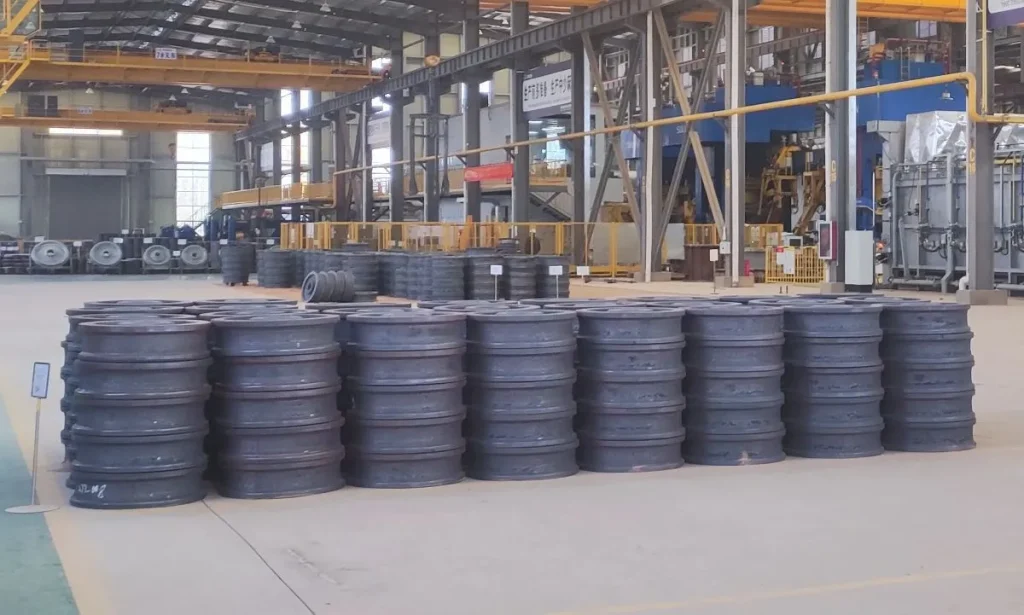
The “Steel Wheel on Steel Rail” concept has survived for two centuries, but its digital soul is just being born. As we move through 2026, intelligent railway components will become the standard, not the exception. For those of us in the manufacturing sector, our mission is to ensure that our digital intelligence matches the physical strength of our products.
At Luoyang Fonyo Heavy Industries Co., Ltd., we are committed to being at the forefront of this revolution. From high-speed forged wheels to railway casting and forging parts, we provide the intelligent railway components that keep the world moving—safely, sustainably, and smartly.
Please visit our website www.railwaypart.com to get more information about us.