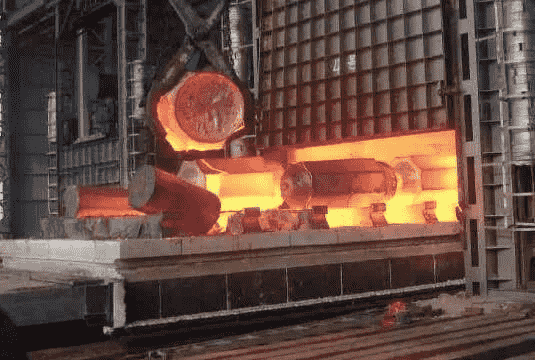
Scan the WeChat code to contact us
Scan the WeChat code to contact us
Feel free to send us a massage and we will reply to you as soon as possible.
Creating the future with heart and soul


As we all know, there are many different casing process in producing railway casings, among them, V-process is a irreplaceable technology, it can produce railway casings with large size and thin wall, and demand high in surface quality., on modern railway manufacturing; the precision of casting processes is directly linked to the safety and reliability of the final product.
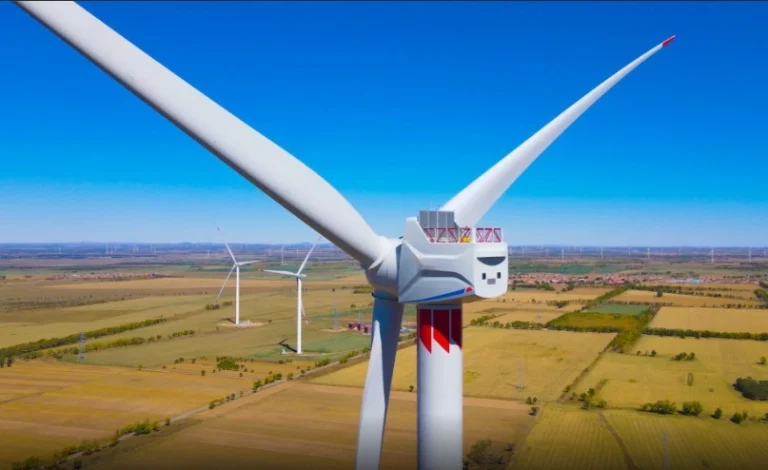
At Luoyang Fonyo Heavy Industries Co., Ltd., we specialize in manufacturing large railway castings, including essential components like axle hung suspension bearing, axle box housing, gearbox housing and wind power motor housing, etc., In order to produce large, thin-walled railway castings, we have adopted the V-process casting method.
To achieve exceptional accuracy and superior surface finishes for these parts, we employ the V-process, or vacuum casting method. This advanced technique, however, presents several distinct technical obstacles. Consequently, this article gives the details of the specific strategies our engineering team implemented to overcome these hurdles and guarantee consistent, high-quality production for all our railway castings.
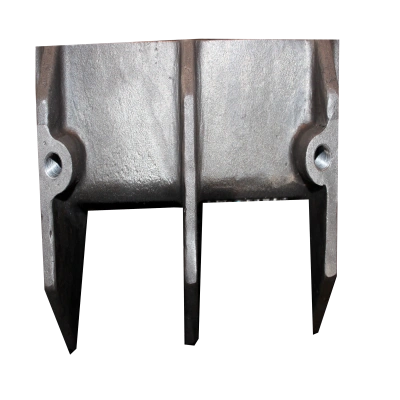
2.1 Process Overview
The V-process is a unique moulding method that utilizes a vacuum and a plastic film to form the sand mould, eliminating the need for binders or water. As a result, it is a cleaner, more environmentally friendly foundry process that yields highly precise railway castings.
2.2 Key Advantages
Resin sand or green sand casting are traditional methods to produce casting parts, while compared to these methods, like the V-process, offers significant benefits. For instance, it provides a better surface finish, higher dimensional accuracy, and allows for easier sand recycling. Moreover, the absence of binders simplifies cleaning operations.
2.3 Direct Application to Railway Components
For critical railway castings such as suspension brackets, these advantages will appear. Specifically, these parts all have complex geometries and stringent strength demands, making the precision on can be achieved by the V-process essential.
3.1 Moulding Complexity
First, for components with uneven wall thickness, it is not easy to make moulding, because thin sections are particularly prone to deformation.
3.2 Maintaining Vacuum Stability
Furthermore, it is very important to maintain a stable vacuum throughout the entire casting process. If the pressure is low, the sand mould can collapse, leading to a defective casting.
3.3 Precise Pouring Control
Additionally, the molten metal must fill the mould within a very short timeframe. Any delay can cause flaws like cold shuts or air pockets in the final railway castings.
3.4 Managing Surface Defects
Finally, because no binders are used, evacuating gases from the mould becomes more challenging, which can potentially lead to minor surface defects.
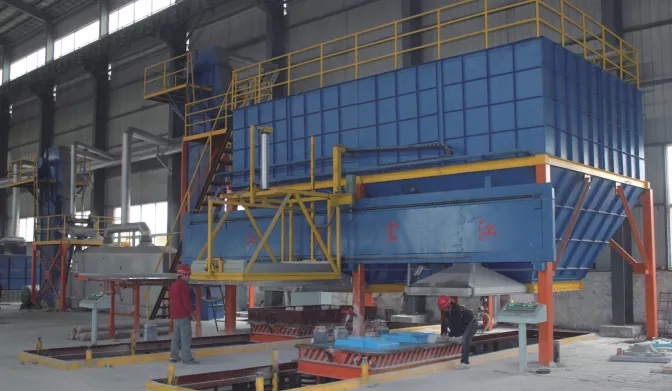
4.1 Advanced Mould Design
To address these issues, we first improved our mould design, using 3D modelling and casting simulation software. This optimization of the gating and riser system reduced stress concentration and, as a result, ensured a balanced metal flow.
4.2 Enhanced Vacuum Systems
Next, we upgraded our vacuum pumps and sealing films. This enhancement can significantly improve vacuum stability during the pouring stage, thereby reducing some defects like deformation and sand inclusion in our railway castings.
4.3 Rigorous Process Monitoring
Moreover, we installed real-time temperature and pressure sensors for enhanced monitoring. In addition, every casting undergoes Ultrasonic Testing (UT) and Magnetic Particle Testing (MT) to guarantee the utmost safety and precision.
5.1 Achieved Results
Through these concerted improvements, we have successfully mass-produced EMU suspension brackets and other railway castings using the V-process. The resulting components consistently exhibit excellent surface quality and will have high dimensional accuracy.
5.2 Positive Market Response
Our customers have confirmed that Fonyo’s railway castings not only meet all technical specifications but also exceed visual standards. This satisfaction has, therefore, strengthened our long-term partnerships with major railway manufacturers.
So we can see that the V-process is a powerful yet challenging casting technology. Through dedicated research and continuous improvement, Luoyang Fonyo Heavy Industries Co., Ltd. has effectively faced these challenges and solved them. Today, we are a trusted global provider of high-precision V-process railway castings, and we have been providing demanding railway projects worldwide. Please visit our website www.railwaypart.com for more details about us.
👉 Contact us to learn more about our customized casting solutions