Scan the WeChat code to contact us
Scan the WeChat code to contact us
Feel free to send us a massage and we will reply to you as soon as possible.
Creating the future with heart and soul


When people talk about railway safety, they often think about signals, tracks, or the train’s braking system as a whole. But one small component plays a very direct role in stopping a train — the railway brake shoes.
Brake shoes may look simple, but they are very important. They work under heavy loads, high temperatures, and repeated braking cycles.
So if we understand how they work, we can choose the right material and avoid unnecessary problems.
A railway brake shoe is a friction component used in traditional wheel-tread braking systems.
It is mounted on the brake rigging and pressed directly against the wheel tread when braking.
When it touches the wheel, friction is created, which slows the wheel down and stops the train.
In simple words:
Brake shoes stop trains by rubbing against the wheels.
They are widely used on freight trains, heavy-haul railways, passenger coaches, and many conventional rail systems around the world.
Even though the system looks complex, the principle is actually simple.
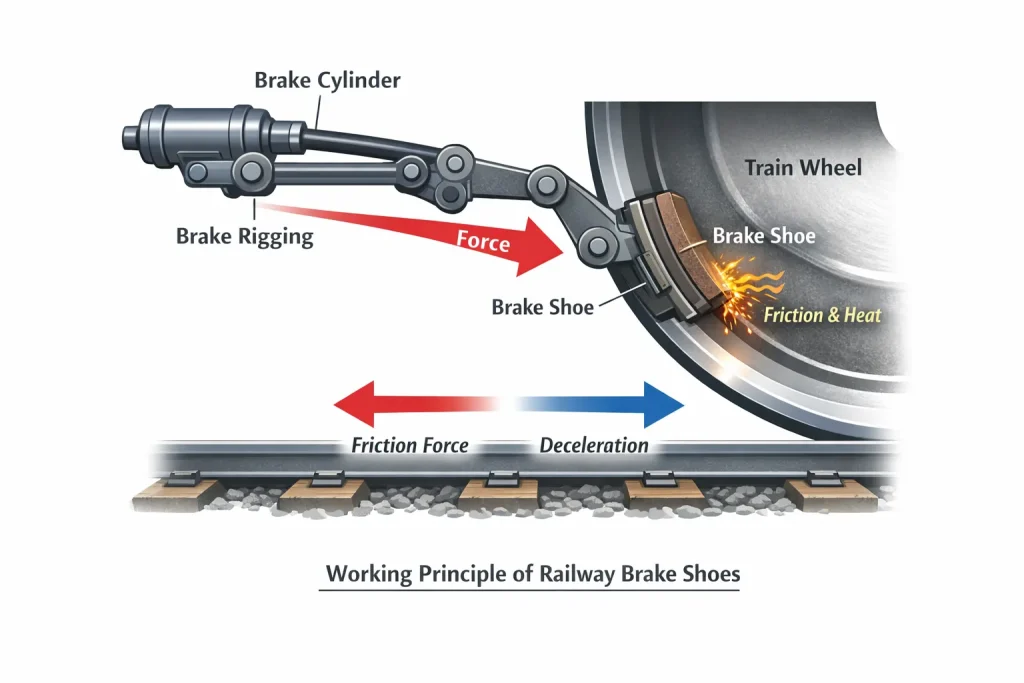
The brake cylinder is the power source of the braking system.
When the driver applies the brake, compressed air enters the cylinder.
The air pressure pushes the piston inside, creating mechanical force.
The cylinder itself doesn’t touch the wheel. Its job is only to generate force.
The force from the cylinder is transferred through the brake rigging, a set of mechanical parts like levers, rods, and beams.
Its job is to transfer the braking force from the cylinder to the brake shoes. Moreover, it makes sure that both sides of the wheel receive the force evenly. Additionally, it ensures the brake shoes press the wheel correctly.
A well-designed brake rigging helps the shoes wear evenly and work smoothly.
Finally, the brake shoe is pressed against the wheel tread.
At this moment, the wheel is rotating, and the brake shoe resists the movement. Consequently, friction is generated, which turns kinetic energy into heat.
As friction increases, the wheel slows down, then the train decelerates safely.
This is the main point of railway braking.
Not all brake shoes are the same. Different railways use different materials based on their operating conditions.
Grey iron is the traditional option. It is known for its stable friction performance. Additionally, it offers good heat resistance property and high reliability. It’s still widely used on freight trains and heavy-haul railways.
Ductile iron is stronger and tougher than grey iron. It offers better resistance to cracking. Moreover, it provides stable performance under heavy loads. It’s suitable for demanding applications where durability matters.
Composite brake shoes are made from non-metallic friction materials.
With the composite material, they are chosen for their lower noise, less wheel wear, and cleaner operation. These are often used on passenger trains and urban rail systems.
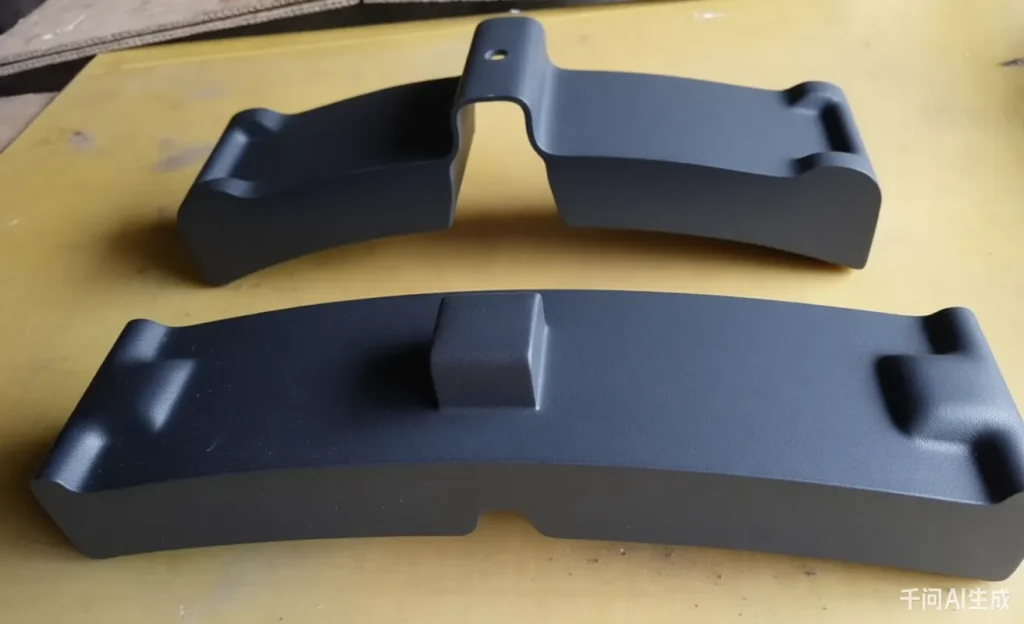
Choosing the right material is more than a technical detail — it affects daily operations. The right material can ensure stable braking performance. Furthermore, it can protect wheel treads, reduce noise, extend service life, and lower maintenance costs. There isn’t a single material that works for everything. The best choice depends on how and where the train operates.
Railways operate under very different conditions. Some carry heavy loads. Some run at high speed. Some work in cold climates. Others focus on low noise and comfort. Because of this, brake shoes often need to be customised. Customisation can include choosing the right material and adjusting friction performance. Additionally, it involves designing the size and shape, adapting mounting or back plate design, and meeting different international standards.
A well-matched brake shoe works better, lasts longer, and keeps trains safe.
Brake shoes may not be complicated parts, but they are extremely important. They directly affect braking safety, as well as influence wheel condition and operating costs. Understanding how brake shoes work and choosing the right material makes a real difference in railway performance.
At Luoyang Fonyo Heavy Industries Co., Ltd., we provide reliable and customised railway brake shoes to meet your specific needs. Visit our website at www.railwaypart.com to learn more or contact us — we can help you find the most suitable solution for your application.
You can also contact us directly:
WhatsApp: +86 15515351287
Email: sales@railwaypart.com
We’re always ready to help you find the most suitable solution for your application.