Scan the WeChat code to contact us
Scan the WeChat code to contact us
Feel free to send us a massage and we will reply to you as soon as possible.
Creating the future with heart and soul


When people see a heavy casting for the first time, they usually focus on its size.
But in railway and heavy industry, size is only the beginning.
What really matters is how that casting is machined.
In railway applications, heavy casting components often weigh several tons. These parts cannot simply be placed on a small CNC machine. They require a specialized process known as heavy casting machining, supported by large-scale equipment such as a gantry machining center and vertical lathes.
Let’s walk through how it actually works inside a modern workshop.
Heavy casting machining refers to the precision machining process applied to large, high-weight cast components.
After casting, the part is not yet ready for service. It may have:
Machining removes excess material and brings the part to its final:
For railway components, this stage is critical. Even a small deviation can affect load distribution and long-term fatigue performance.
Here is a simple engineering reality:
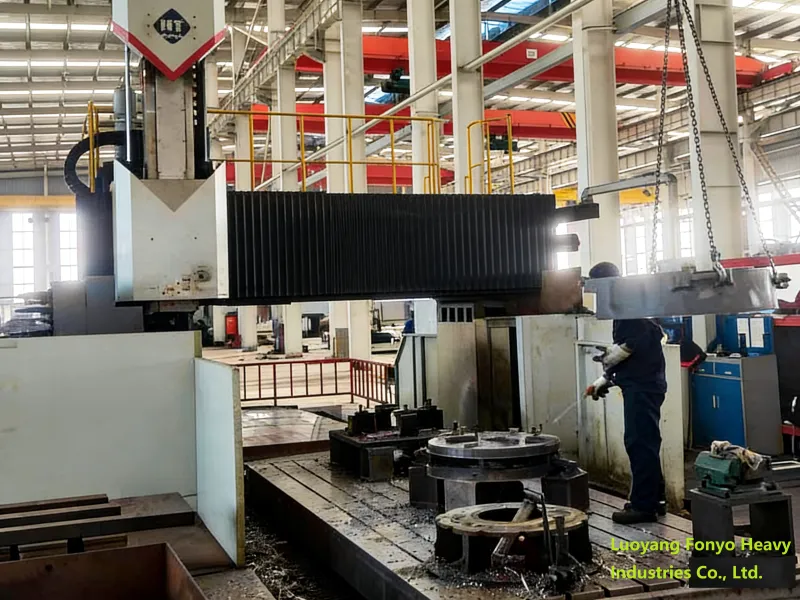
When the workpiece is too heavy to move easily, the machine must move around the workpiece.
This is where a gantry machining center becomes essential.
Unlike standard CNC machines, a gantry machining center has a bridge-type structure. The workpiece stays fixed on the table, while the machine moves along multiple axes above it.
This provides:
For heavy casting machining, rigidity is everything. If the structure is not stable, precision cannot be maintained.
1️⃣Initial Inspection and Layout
Before machining begins, the casting is inspected for:
Proper setup is critical. Large castings are difficult to reposition later.
2️⃣ Rough Machining
Rough machining removes large amounts of excess material.
Equipment typically used:
The goal here is not final precision.
It is to relieve stress and create basic geometry.
In heavy casting machining, rough cutting must be controlled carefully to avoid distortion.
3️⃣ Semi-Finish Machining
At this stage:
This prepares the component for final finishing.
4️⃣ Finish Machining
Finish machining defines the final tolerance.
For railway components, this may include:
Fewer setups mean:
That is one of the biggest advantages of advanced heavy casting machining capability.
Railway components operate under:
A casting may look strong, but without proper machining:
In other words:
Casting quality defines strength.
Machining quality defines performance.
That is why serious railway suppliers invest in large vertical lathes and gantry machining centers.
In a workshop equipped for heavy casting machining, you typically find:
These machines allow stable processing of multi-ton cast components while maintaining dimensional accuracy and repeatability.
This combination of casting expertise and precision machining capability is what enables reliable heavy industrial parts.
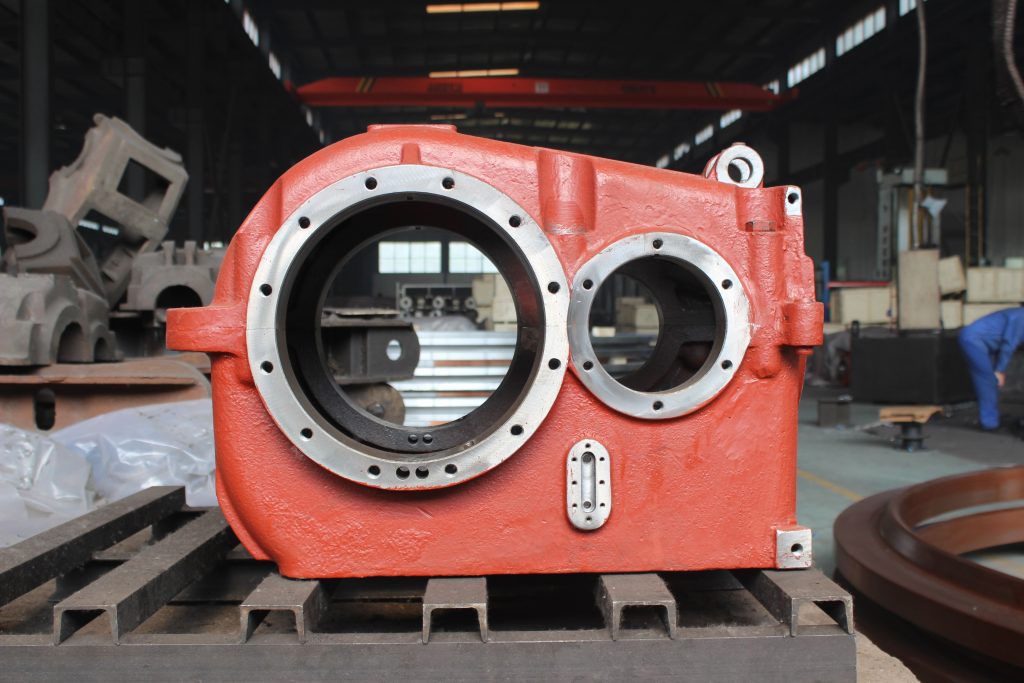
Heavy castings are not finished products when they leave the foundry.
They only become functional railway components after precise and controlled heavy casting machining.
In heavy industry, machining capability directly determines product reliability. Without proper equipment and experience, even a well-made casting cannot achieve its full performance potential.
At Luoyang Fonyo Heavy Industries Co., Ltd., we combine large-scale casting capability with advanced gantry machining centers to deliver high-precision railway and heavy industrial components.
Learn more about our machining capabilities at: www.railwaypart.com
Heavy casting machining is the precision machining process applied to large and high-weight cast components. It removes excess material, improves dimensional accuracy, and ensures proper surface finish for industrial use.
A gantry machining center is used because heavy castings are too large and heavy to move easily. The machine moves over the workpiece, providing better rigidity, stability, and precision during machining.
Heavy casting machining is commonly required in:
Both stages are essential in heavy casting machining to ensure long-term performance.
Machining directly affects:
Even a high-quality casting cannot perform reliably without precise machining.