Scan the WeChat code to contact us
Scan the WeChat code to contact us
Feel free to send us a massage and we will reply to you as soon as possible.
Creating the future with heart and soul


Heat treatment is a controlled process of heating and cooling metal. It changes the internal structure of railway castings to give them better properties. For important parts like bogie frames and axle boxes, this step is required. The main goals are to make the parts stronger, tougher, and more resistant to wear. It also removes internal stress from the casting process. Finally, it ensures the part keeps its shape and size for accurate fitting and a long life. In short, heat treatment turns a basic casting into a strong and reliable railway component.
Railway parts face very tough conditions. They carry heavy loads, handle constant shaking, suffer impacts, and deal with hot and cold temperatures. Correct heat treatment stops serious problems. It prevents cracks that can start from internal stress. It fights fatigue failure by improving the metal’s internal structure. It also stops the part from warping or wearing out too quickly. Therefore, proper heat treatment is a key factor for railway safety and passenger protection.
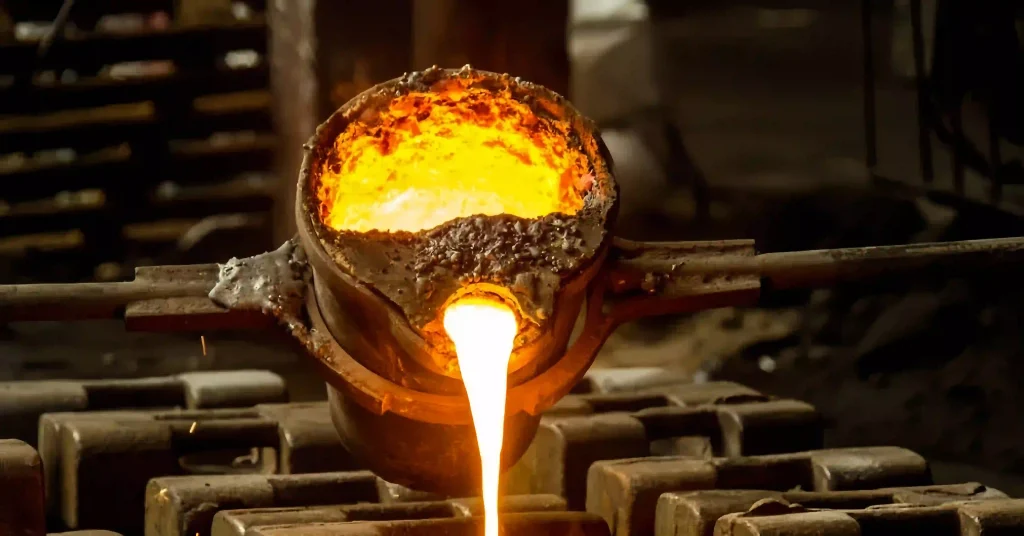
There are several standard processes used. Normalizing refines the metal’s grain structure after casting. The part is heated and then cooled in air. This makes the material more even and removes some stress.
Quenching is used to make the part very hard and strong. The heated part is cooled very quickly in oil, water, or a special solution. However, this can also make the metal brittle.
Tempering always follows quenching. The quenched part is heated again to a lower temperature. This reduces brittleness and increases toughness, creating a good balance of hardness and strength.
Stress Relief Annealing is another process. It slowly heats the part to a moderate temperature and then cools it very slowly in the furnace. This mainly focuses on removing leftover stress to keep the part dimensionally stable.
Different railway castings need different treatments. Bogie frames usually get normalizing and then stress relief annealing. This ensures a stable shape. Axle boxes often get normalizing plus quenching and tempering for a mix of high strength and good toughness. Gearbox housings focus on stability, so they normally receive normalizing and stress relief. Axle-hung bearing housings commonly undergo quench and temper treatment to handle high pressure and fatigue.
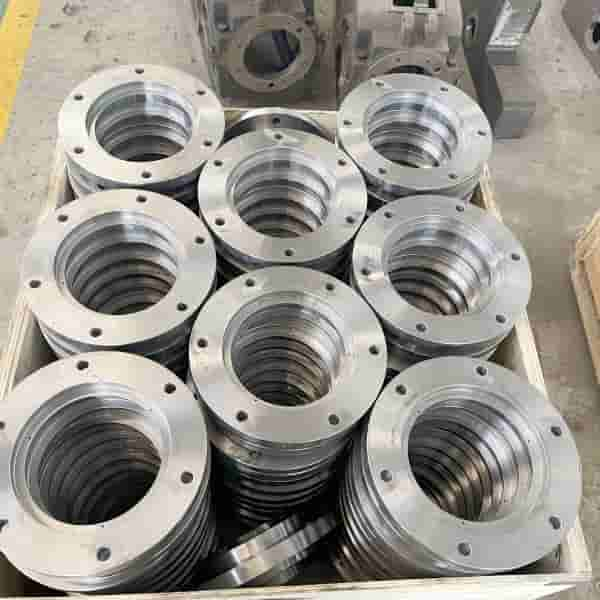
Problems can occur if the process is not controlled. Warping or distortion can happen from heating or cooling too fast. To prevent this, we control the temperature changes carefully and use special racks in the furnace. Cracking might happen during quenching, especially for complex shapes. Using a milder cooling liquid or a special quenching method can help. Soft spots or uneven hardness can result from incorrect furnace temperature or poor quenching. Regular checks of the equipment prevent this. Surface damage like scaling can be avoided by using a protective gas in the furnace or by planning for extra machining material.
After heat treatment, every part is carefully checked. Hardness is tested in several places to ensure it meets requirements. Specialists also look at the metal’s internal structure under a microscope. For parts that receive impacts, a toughness test is done. The part’s dimensions are measured to check for any distortion. Also, all information about the treatment, like furnace temperatures and batch numbers, is recorded for full traceability.
The railway industry follows strict global rules. These standards, like the European EN 15085 and EN 1563 or the North American AAR M-201, give clear instructions. They specify how the equipment should be used, how to validate the process, how to train people, and which test methods to use. This ensures every part is made to the same safe standard anywhere in the world.
Professional manufacturers use a complete system to ensure quality. They use modern computer-controlled furnaces for consistent results. They write and follow detailed instructions for each type of casting. They constantly monitor and record the temperature during every batch. Their staff are specially trained and certified. Finally, they work under international quality management systems like ISO 9001 and IRIS. This means their processes are well-documented and always improving.
Heat treatment is a vital step that gives railway castings their strength and long service life. At Luoyang Fonyo Heavy Industries Co., Ltd., every stage of this process is carefully controlled to make the metal more reliable for the demanding conditions of rail operation. By fully understanding heat treatment principles, following strict industry standards, and carrying out thorough quality inspections, we produce castings that meet high performance expectations. These strong and dependable components form a solid foundation for safe and reliable rail travel around the world.
Please visit our website www.railwaypart.com to get more information about us.
If you want any products, please contact us.