Scan the WeChat code to contact us
Scan the WeChat code to contact us
Feel free to send us a email and we will reply to you as soon as possible.
Creating the future with heart and soul


If you read our previous article Cast Steel vs. Ductile Iron, you already know one thing: Even though both are cast materials, engineers think about them very differently. This time, let’s focus on railway cast steel, and on one word that comes up again and again in railway projects:
austenite.
Don’t worry. I’m not going to turn this into a metallurgy class.
Let’s talk about it the way engineers actually do.
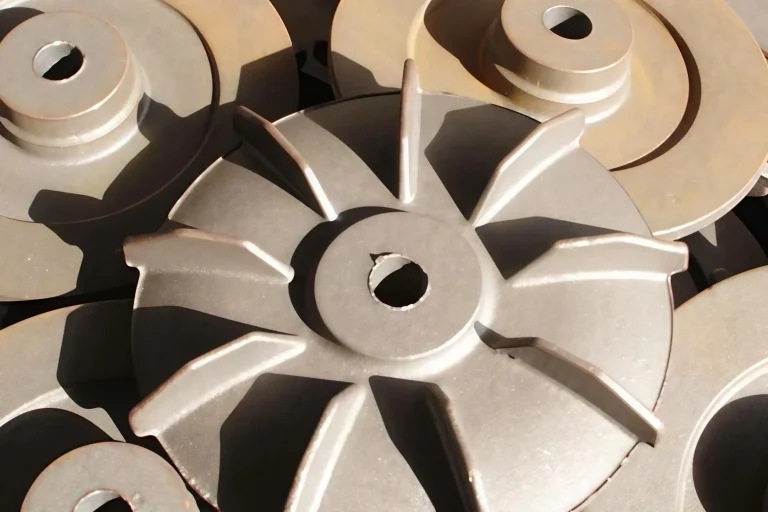
A lot of people assume cast steel is strong simply because of its chemistry.
More carbon. More alloy. Stronger steel.
That’s not wrong — but it’s incomplete.
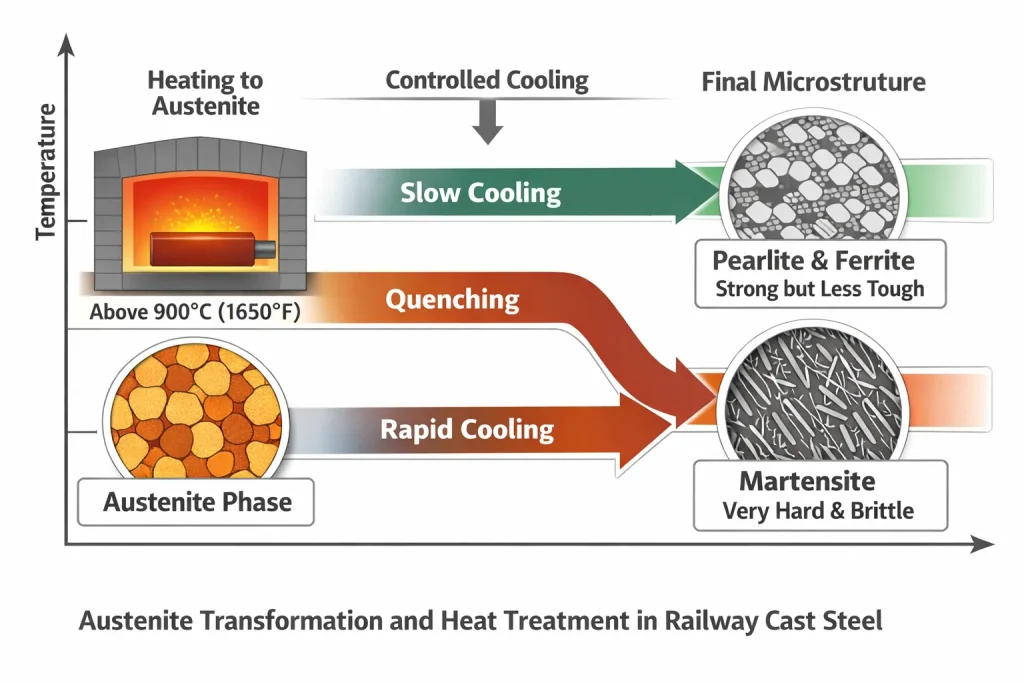
For railway cast steel, strength comes from what the material goes through after casting. Our engineers care about the following questions: whether the steel fully enters the austenite state, whether thick sections of castings really reach required temperature, and whether cooling is controlled instead of rushed. These steps decide how the final structure forms, and how the parts behave during their service life.
That’s why engineers often say:
Cast steel isn’t born strong. It’s trained to be strong.
So what is austenite, in simple terms?
It’s the structure steel that enters when it’s heated high enough. At that point, atoms can move more freely, and carbon distributes more evenly. This doesn’t give you strength by itself — but it sets the stage for everything that comes next.
A good way to think about it is this:
Austenite is like warming up clay before shaping it.
You don’t keep it soft forever, but if you skip this step, nothing afterwards comes out right.
That’s why engineers pay attention to whether the entire casting truly reaches the austenite state, not just the surface.
On paper, reaching austenite sounds easy.
In real railway castings, it’s not.
Large sections heat slowly. Cores lag behind surfaces. Temperature gradients build up. Engineers have to ask very practical questions: Is the centre really hot enough? Has it stayed there long enough? Is the structure uniform before cooling starts?
For thick railway cast steel parts, getting this right is often one of the hardest parts of the process.
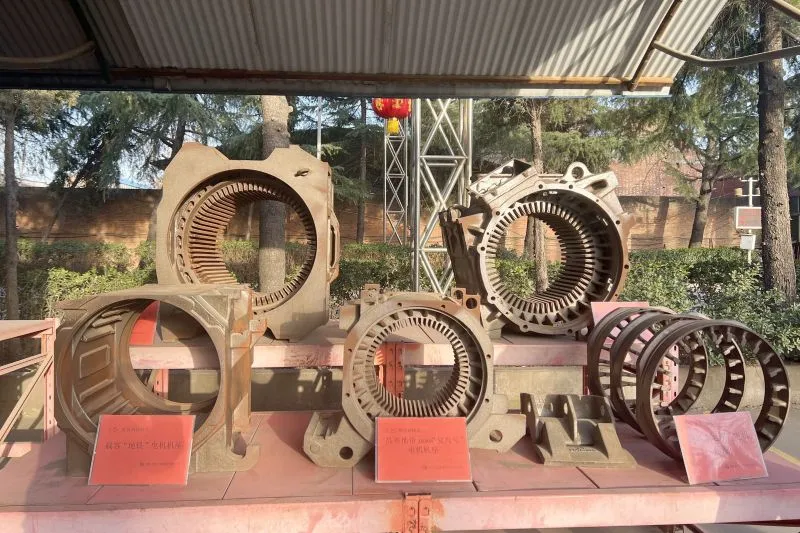
Two cast steel parts can look identical. Same drawing. Same steel grade. Same weight.
And still perform very differently.
The reason is usually heat treatment.
Normalising is used to even things out and make properties more predictable. Quenching and tempering are chosen when strength and toughness both matter. For thick sections, cooling often has to be slowed and controlled to reduce internal stress. In real projects, heat treatment isn’t just a box to tick, we can say it’s a kind of design decision.
Railway engineers don’t chase maximum hardness.
They want stable, repeatable performance.
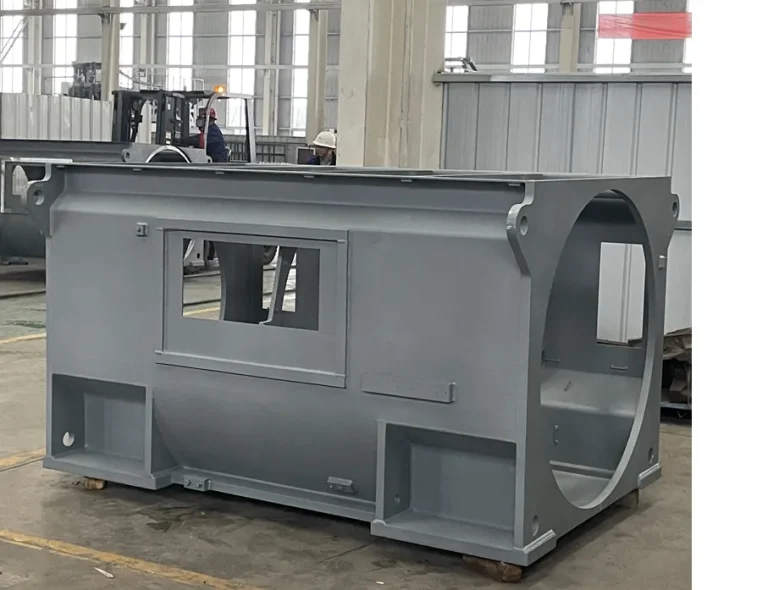
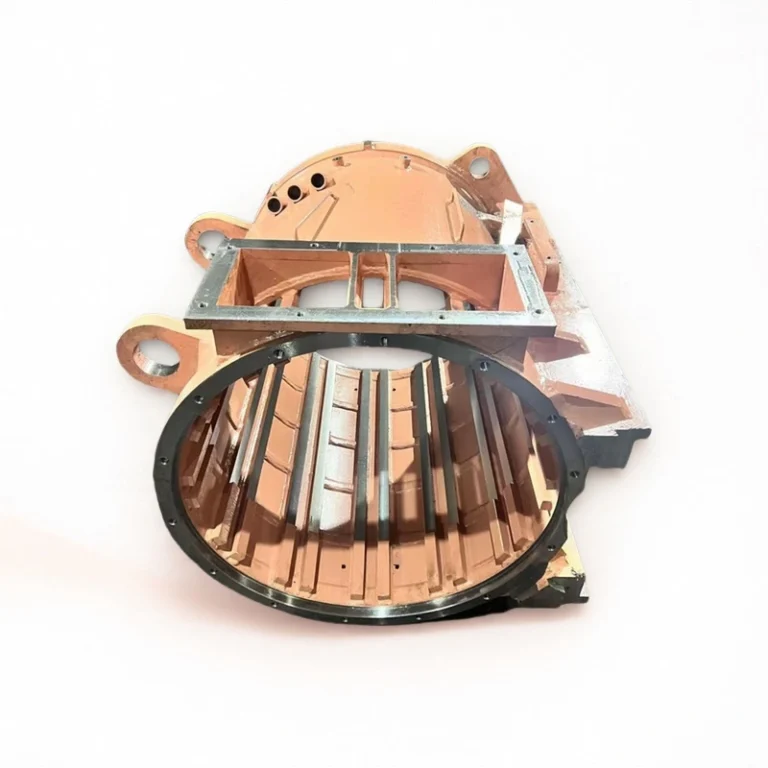
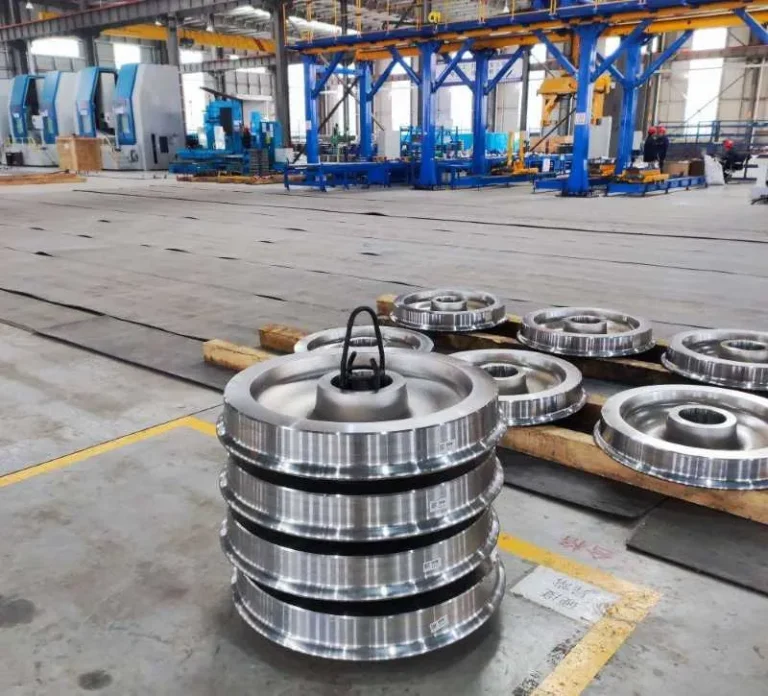
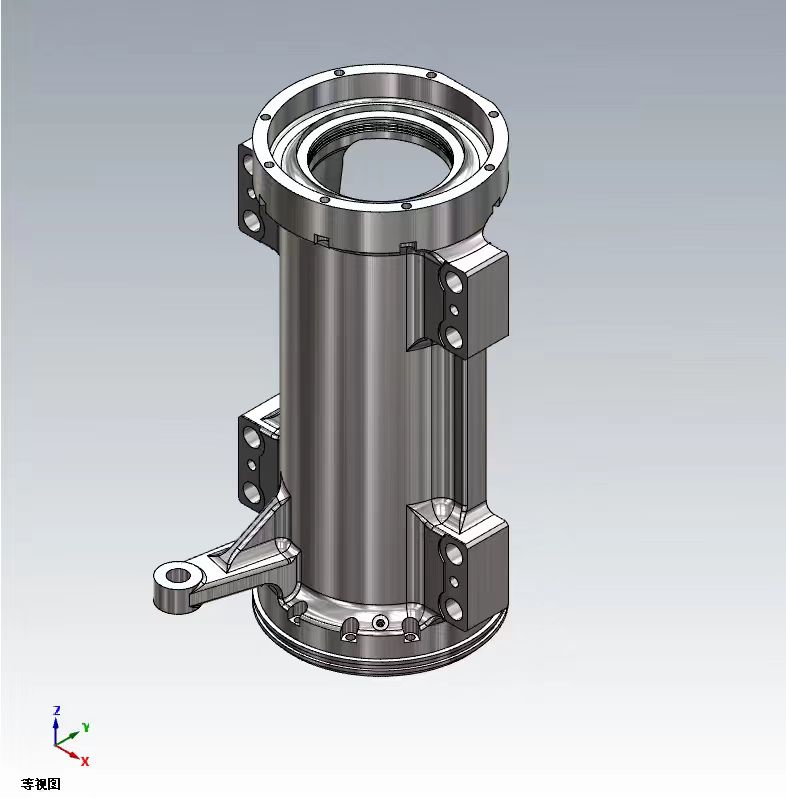
Railway cast steel parts will work in constant stress. They will work under hard condition such as repeated impacts, long-term cyclic loading, temperature changes, and strict safety requirements. In this environment, small inconsistencies inside the metal can turn into big problems over time.
That’s why railway engineers focus so much on controlled transformation from austenite to the final structure. The goal isn’t perfection on paper — it’s reliability in real service.
One thing that’s easy to overlook is how closely design and heat treatment are connected.
Engineers think about wall thickness changes of casting parts, fillet radii, thermal mass, and whether heat can actually reach the core during austenitization. If the design ignores these realities, no heat treatment later can fully fix it.
That’s why experienced manufacturers plan heat treatment requirements from the very beginning, not after the casting is poured.
This article is part of our Inside Industrial Casting series, exploring engineering principles behind industrial casting materials and processes.
You may also be interested in:
When engineers talk about austenite in railway cast steel, they’re not just being academic person. They’re asking simple but practical questions: Can this part be fully austenitized? Can cooling be controlled for this geometry? Will the properties stay stable over the years of working?
That mindset makes the difference between a casting that looks good and one that performs reliably.
At Luoyang Fonyo Heavy Industries Co., Ltd., we approach railway cast steel with this same thinking. We focus not only on dimensions and appearance, but on what happens inside the metal — from austenite formation to final microstructure.
That’s how we produce cast steel components that meet the long-term demands of railway service.
Learn more at www.railwaypart.com.